This article provides general information drawn from the sources below. It has not received an independent specialist review and cannot account for your individual health or safety needs.
The useful part
- Anchor movement to specific openings in your real week, including a smaller fallback for disrupted days.
- Combine aerobic and muscle-strengthening activity over time, but build from your current ability and health context.
- Review consistency, function, access, and recovery rather than treating calorie estimates or a perfect streak as success.
A sustainable movement routine is one you can restart without drama. It has a clear place in the week, a reason that matters to you, and a smaller version for days when time, weather, energy, caregiving, or access changes. The plan should make the next action obvious rather than demand fresh motivation every morning.
CDC recommends that adults work toward a weekly mix of aerobic and muscle-strengthening activity and emphasizes that some activity is better than none. Those public guidelines describe a destination for population health, not a personalized starting prescription.
Find openings that already exist
Look at the coming seven days and mark reliable openings, uncertain openings, and genuine no-go periods. A reliable opening might be the interval after school drop-off or before a standing evening task. An uncertain opening depends on weather or another person. Planning around what repeatedly happens is more durable than assigning activity to an idealized day.
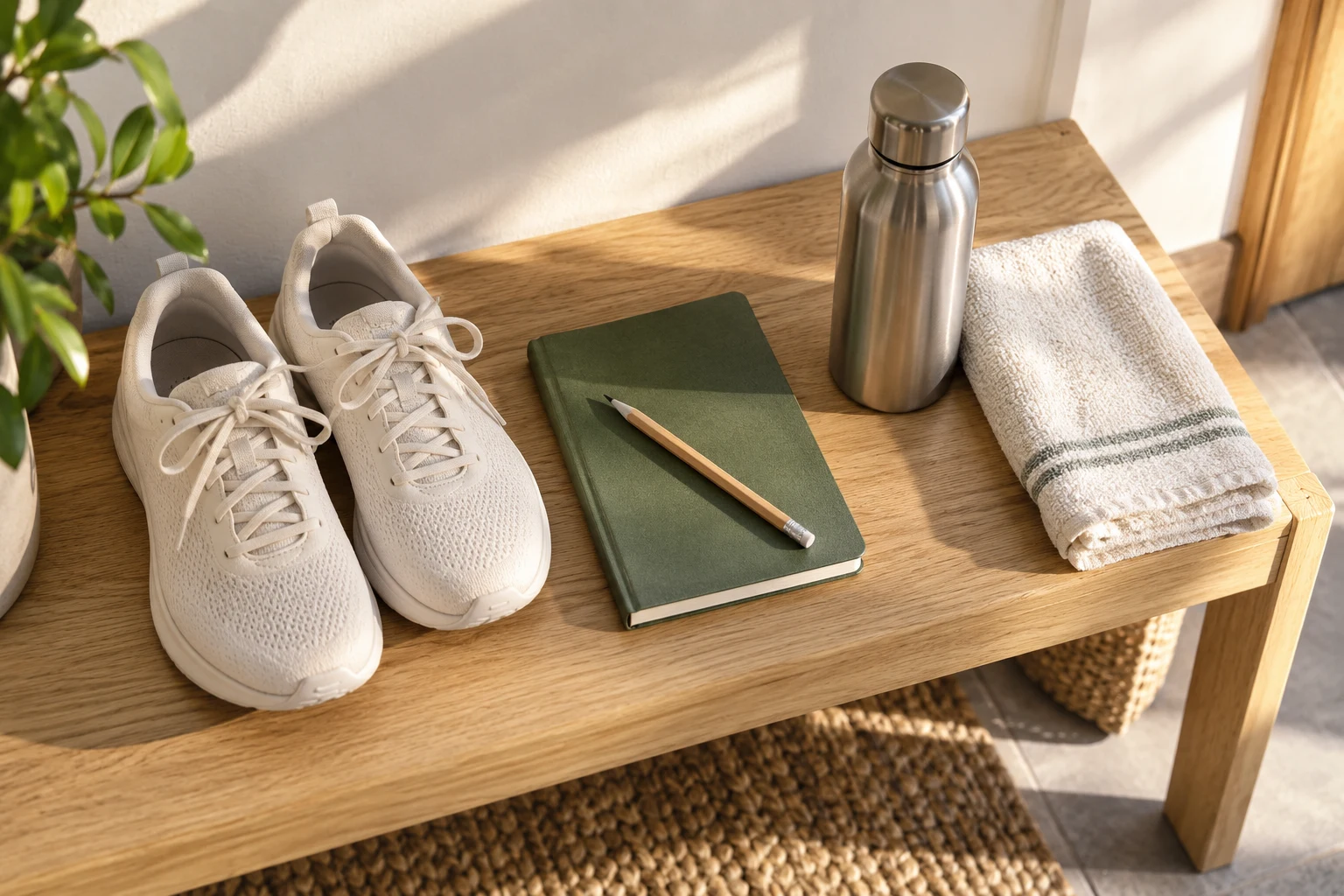
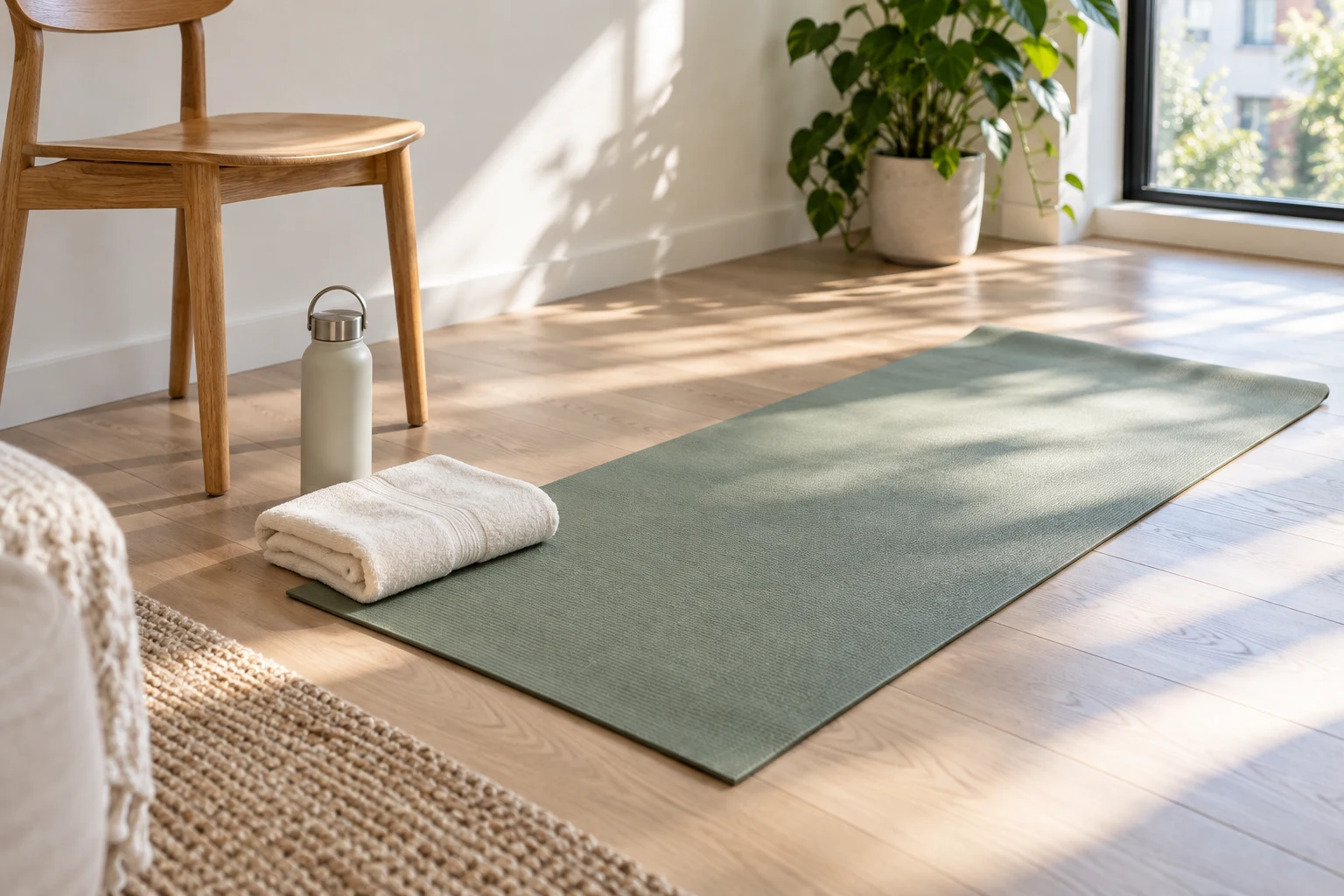
For each opening, name the location, transition, and minimum setup. A walk after lunch requires shoes and a route; a home session may require a cleared floor and a saved routine. Reduce the number of decisions between the cue and the start. If access, disability, neighborhood safety, or caregiving limits an option, treat that as a design fact rather than a failure of willpower.
Keep this in mind
- Mark two reliable openings and one optional opening.
- Write the cue, location, and setup for each.
- Identify transportation, weather, cost, safety, caregiving, and accessibility constraints.
- Prepare one indoor, seated, or equipment-free fallback as appropriate.
Sources: Centers for Disease Control and Prevention; American College of Sports Medicine
Choose movement by the function it serves
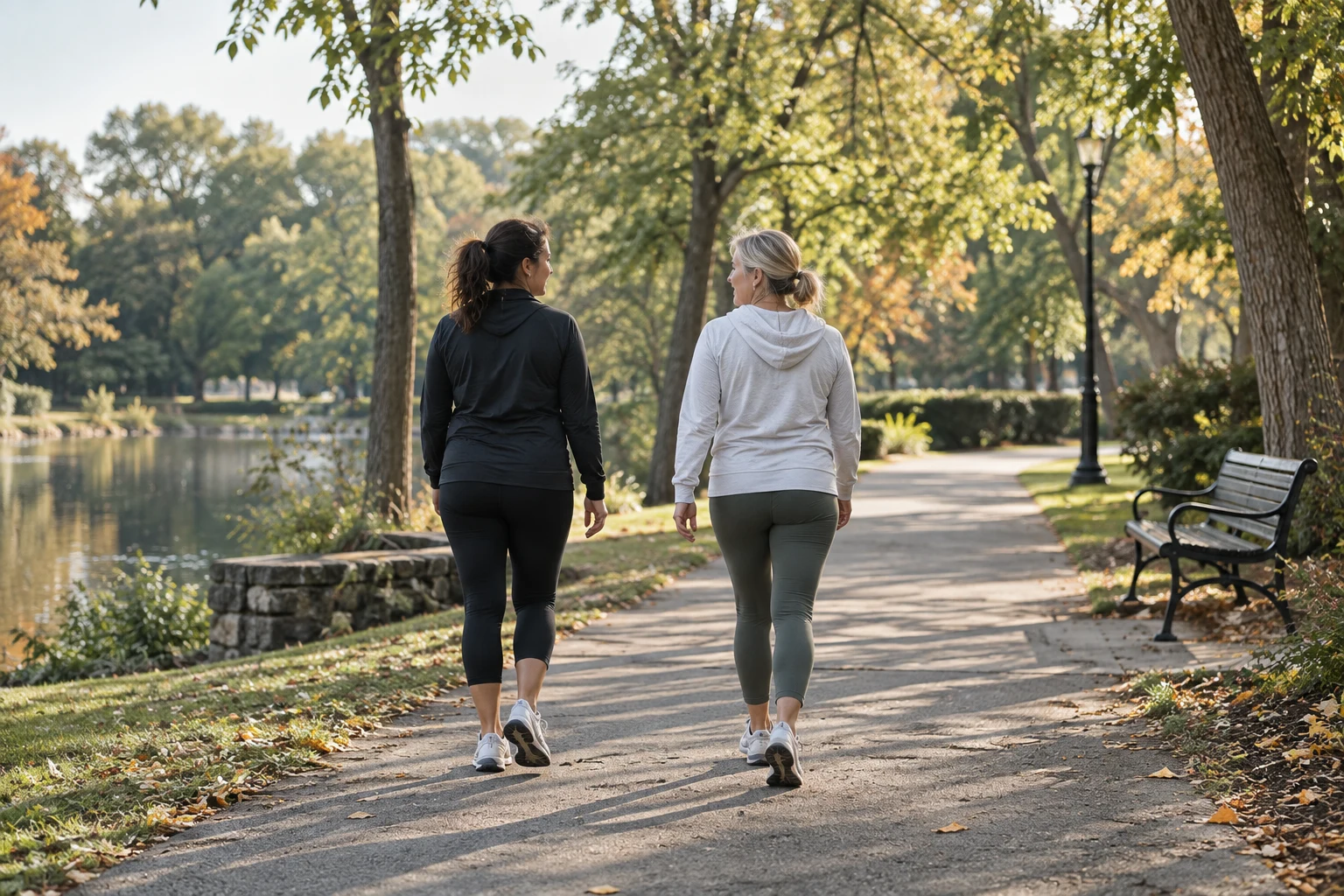
Different activities support different capacities. Brisk walking, cycling, swimming, dancing, and many adapted options can contribute aerobic activity. Resistance work supports muscle strength. Balance and mobility work may address other needs. Choose forms you can access and tolerate, then ask a qualified professional how they fit your history when conditions, symptoms, pregnancy, disability, or a long inactive period complicate the choice.
Enjoyment is practical information. A theoretically efficient activity that you avoid is less useful than an accessible one you repeat. Social time, outdoor time, skill, independence, energy, or completing a daily task may be stronger reasons than appearance. The ACSM forecast reflects professional attention to apps, older-adult programs, and functional fitness; it does not make a popular format necessary.
Sources: Centers for Disease Control and Prevention; American College of Sports Medicine
Create a full version and a minimum version
Give each planned session two forms. The full version fits an ordinary day. The minimum version preserves the cue when the day contracts: a shorter route, a few reviewed movements, or another accessible option. The minimum is not punishment and does not need to compensate for missed time. It is a bridge back to the routine.
Do not make the fallback unsafe by compressing a warm-up, rushing technique, or choosing an intensity unsuited to your condition. If the full plan requires supervision or equipment, the smaller plan may need a different activity entirely. A qualified exercise professional can help define sensible variations and stop criteria.
| Opening | Full version | Minimum version | Likely friction | Preparation |
|---|---|---|---|---|
| Reliable weekday opening | Chosen activity and duration | Shorter reviewed option | Late meeting | Calendar cue and clothes ready |
| Weekend social opening | Walk, class, or recreation | Independent accessible option | Partner unavailable | Route or backup location |
| Weather-dependent opening | Outdoor activity | Indoor alternative | Heat, cold, or rain | Check conditions and clear space |
| Low-energy day | Appropriate easy session or rest | Gentle reviewed option | Poor recovery or symptoms | Use stop criteria; do not chase a streak |
Track only what changes the next choice
A simple weekly mark can answer whether the routine happened. Add one note about access, enjoyment, function, or recovery if it will change next week. Calorie estimates are not needed for this routine audit; focus on whether the planned activity happened and fit your week.
If a device or app helps, choose one metric and one action. If tracking creates anxiety, compulsive checking, or pressure to ignore pain and fatigue, step back and discuss that response with an appropriate professional. The plan should support your life rather than turn every day into a score.
Sources: American College of Sports Medicine
Use a ten-minute weekly reset
At week’s end, circle what happened and identify the largest friction. Change one element: move the time, reduce setup, choose a closer location, arrange support, or replace an activity you dread. Keep successful cues in place. Missing a week does not erase the information you learned about what fits.
Seek medical guidance before starting or changing activity when your health history or symptoms call for it, and stop for concerning symptoms. The routine’s strength is ordinary repeatability: a plan with room for work, care, weather, disability, recovery, and return.
Sources & further reading
Factual guidance is grounded in the sources below. Styling suggestions and decision aids are our editorial interpretation.
- Adding Physical Activity as an AdultCenters for Disease Control and Prevention · Accessed October 1, 2026
- The Future of Fitness: ACSM Announces Top Trends for 2026American College of Sports Medicine · Accessed October 1, 2026
Written with care
Our aim is useful guidance, clear evidence, and considered choices. Found something that needs a second look? Tell us about a correction.