This article provides general information drawn from the sources below. It has not received an independent specialist review and cannot account for your individual health or safety needs.
The useful part
- Start with a familiar protein-containing food and add produce or a grain according to preference, access, and dietary needs.
- Powder can be a convenience when a food breakfast is impractical; a clinician or dietitian can assess whether it fits a medical nutrition plan.
- Compare serving size, protein amount, ingredient source, allergens, added ingredients, claims, and independent certification without assuming FDA preapproval.
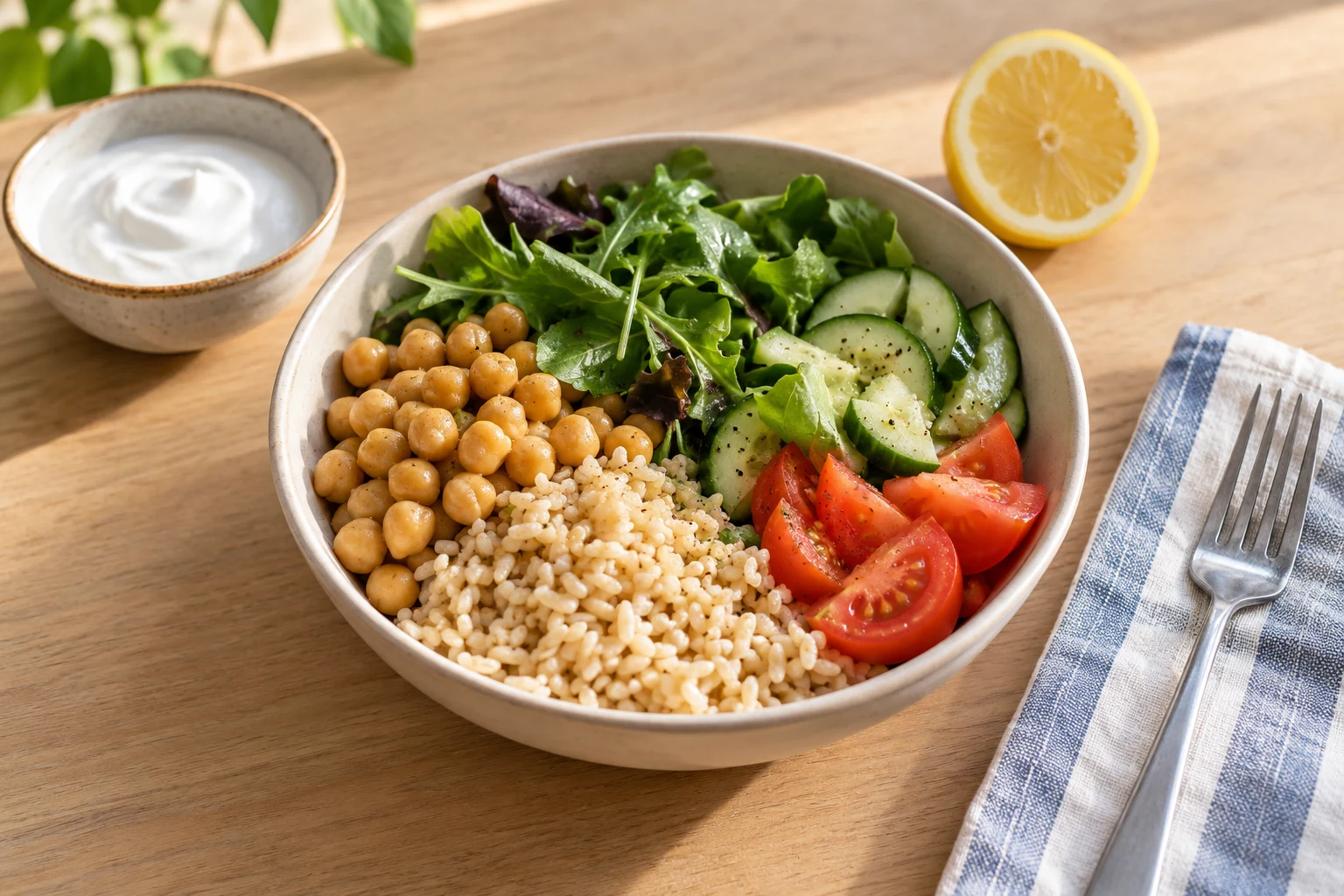
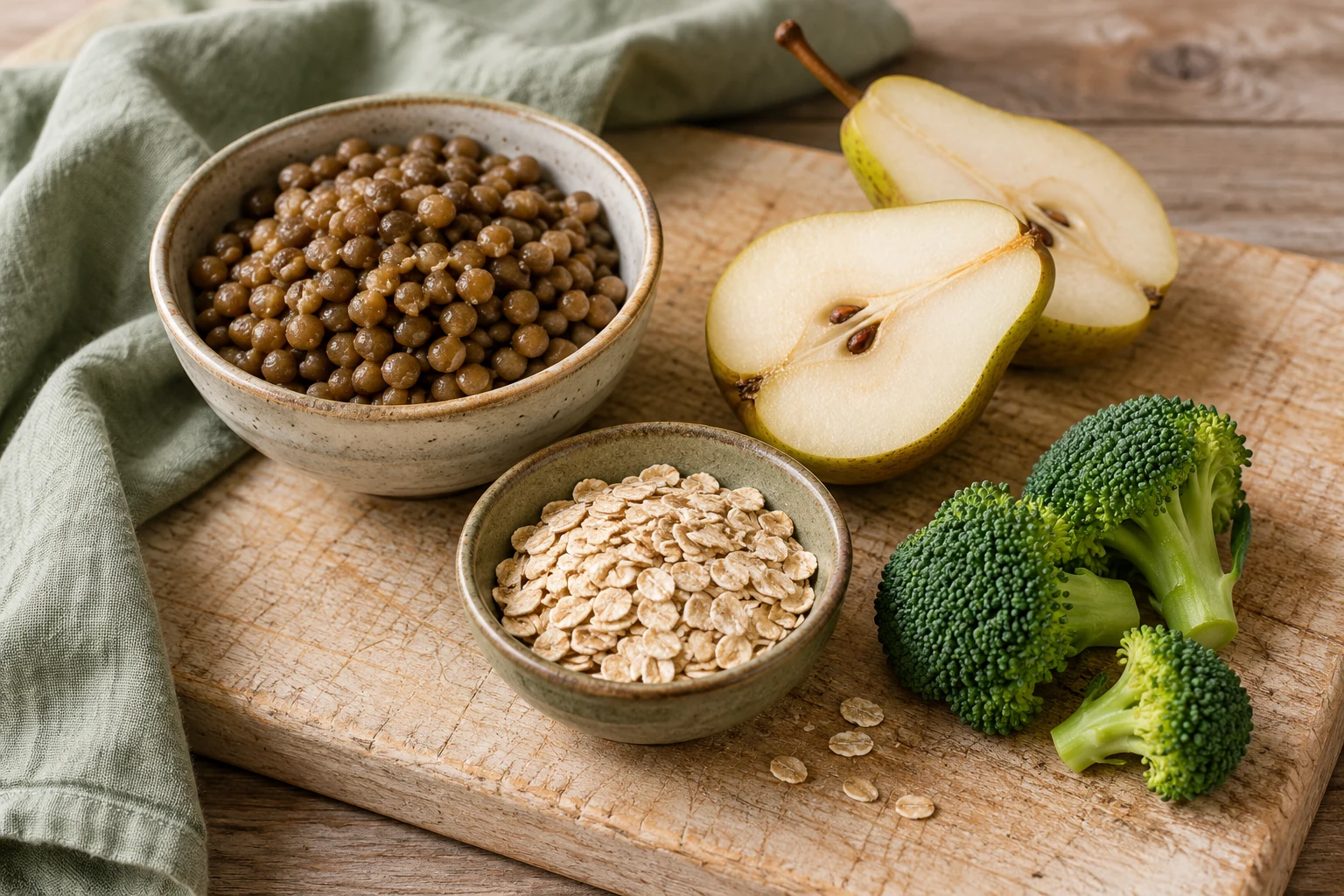
Protein at breakfast does not require a specialized recipe or supplement. Eggs, dairy foods, soy foods, beans, fish, meat, nuts, seeds, and combinations of ordinary foods can all contribute, depending on culture, budget, appetite, allergies, and dietary pattern. The practical task is to assemble a meal you can prepare and eat consistently.
NIH’s Office of Dietary Supplements explains that adequate food and fluid, training, and preparation are central to performance and that only some performance supplements have sufficient evidence for particular uses. It also notes that many active people can obtain adequate protein from food.
Use a food-first breakfast builder
Choose one familiar protein-containing anchor, then add foods that make the meal satisfying and workable. Examples include yogurt with oats and fruit, eggs with toast and vegetables, tofu with rice, beans in a tortilla, nut or seed butter on bread with fruit, or leftovers that do not resemble traditional breakfast. These are assembly examples, not prescribed portions.
Needs differ by body size, age, training, total diet, pregnancy, illness, kidney function, appetite, and goals. A label can show what a packaged food contains, but it cannot choose an individualized target. A registered dietitian or clinician can help when the amount or timing has medical or performance implications.
| Situation | Food-first anchor | Add for practicality | Question to check |
|---|---|---|---|
| Very little prep time | Yogurt, soy yogurt, eggs, or leftovers | Fruit or ready grain | Can it be prepared safely in advance? |
| Portable morning | Sandwich, bean wrap, or shelf-stable combination | Container and cold pack if needed | How long will it be unrefrigerated? |
| Plant-based pattern | Soy foods, beans, nuts, seeds, grains | Mix familiar foods across the day | Are allergens and fortified nutrients considered? |
| Low morning appetite | Smaller familiar meal | Shift more food later if appropriate | Is appetite change persistent or concerning? |
Sources: NIH Office of Dietary Supplements; U.S. Food and Drug Administration
Define the job before adding powder
Powder can be a convenient ingredient when a food breakfast is impractical or a clinician or dietitian has included it in a nutrition plan. It is not a treatment for chewing or appetite problems. It can also add cost, sweetness, flavor, texture, and ingredients that are unnecessary for the task.
Ask what problem it solves and whether milk, soy beverage, yogurt, tofu, eggs, beans, nuts, seeds, or another accessible food solves it adequately. A scoop added to an already sufficient meal is not automatically useful. Powder also does not replace the variety and eating experience of a complete diet.
Sources: NIH Office of Dietary Supplements
Read the label in a fixed order
Start with serving size and protein per serving. Then identify the protein source, ingredient list and any allergen declarations, added sweeteners or other active ingredients, preparation directions, and warnings. Compare products on the same prepared basis; a large scoop or multiple-scoop serving can make headline numbers misleading.
Dietary supplements are not approved by FDA for safety and effectiveness before sale. A structure-function disclaimer does not prove that a product works. If independent certification matters for sport or another setting, verify the exact product and lot or listing in the certifier’s current directory.
Keep this in mind
- Confirm whether the item is a conventional food or dietary supplement.
- Compare serving size and protein amount on the same basis.
- Identify protein source, allergens, sweeteners, stimulants, herbs, and other active ingredients.
- Read warnings, storage, preparation, and expiration information.
- Verify any certification for the exact product in the certifier’s directory.
Sources: U.S. Food and Drug Administration; U.S. Food and Drug Administration; U.S. Food and Drug Administration
Check medical, allergy, and food-safety fit
People with food allergies need to check current ingredient and allergen labeling, including a Contains statement where present, and contact the manufacturer about cross-contact questions when needed. Kidney disease, pregnancy, medication use, digestive conditions, eating-disorder history, and other medical circumstances can change the decision. A clinician or registered dietitian can assess those factors without turning a general article into personal treatment.
Mixed drinks and perishable breakfast foods still need safe handling. Follow package directions, use clean equipment, refrigerate perishables promptly, and do not assume a dry powder is sterile or appropriate for every person. Persistent appetite loss, swallowing difficulty, or unintended weight change deserves appropriate care.
Sources: U.S. Food and Drug Administration; U.S. Food and Drug Administration
Run a three-breakfast convenience test
Before buying a large container, test three breakfasts built from foods already available. Record preparation time, portability, appetite, cleanup, and whether the meal fit the morning. If a consistent gap remains, define it precisely and compare a small number of powders by the label checklist.
The useful conclusion may be a food routine, a powder used occasionally, or a conversation with a dietitian. Popularity does not settle the choice.
Sources: NIH Office of Dietary Supplements; U.S. Food and Drug Administration
Sources & further reading
Factual guidance is grounded in the sources below. Styling suggestions and decision aids are our editorial interpretation.
- Dietary Supplements for Exercise and Athletic Performance - ConsumerNIH Office of Dietary Supplements · Accessed October 1, 2026
- The Nutrition Facts LabelU.S. Food and Drug Administration · Accessed October 1, 2026
- FDA 101: Dietary SupplementsU.S. Food and Drug Administration · Accessed October 1, 2026
- Questions and Answers Regarding Food Allergens — Edition 5U.S. Food and Drug Administration · Accessed October 1, 2026
Written with care
Our aim is useful guidance, clear evidence, and considered choices. Found something that needs a second look? Tell us about a correction.