The useful part
- Turn seats toward one another before hiding the screen.
- Give the evening one clear activity surface and put its supplies within reach.
- Plan for the number of people who actually gather, while keeping safe paths and stable furniture.
A screen-free living room does not require banishing the television. It requires another activity to be easier to start. When seats share a focal point, a table is clear, and a game, book, or music source is within reach, the room offers a believable alternative to default viewing.
Houzz's early-2026 U.S. search report found rising interest in card rooms, board-game rooms, libraries, and other analog gathering spaces. Search growth can make a niche look larger than it is, and it does not measure completed rooms. The durable idea is simpler: arrange for connection first, then decide how visible the screen should be.
Create a second focal point
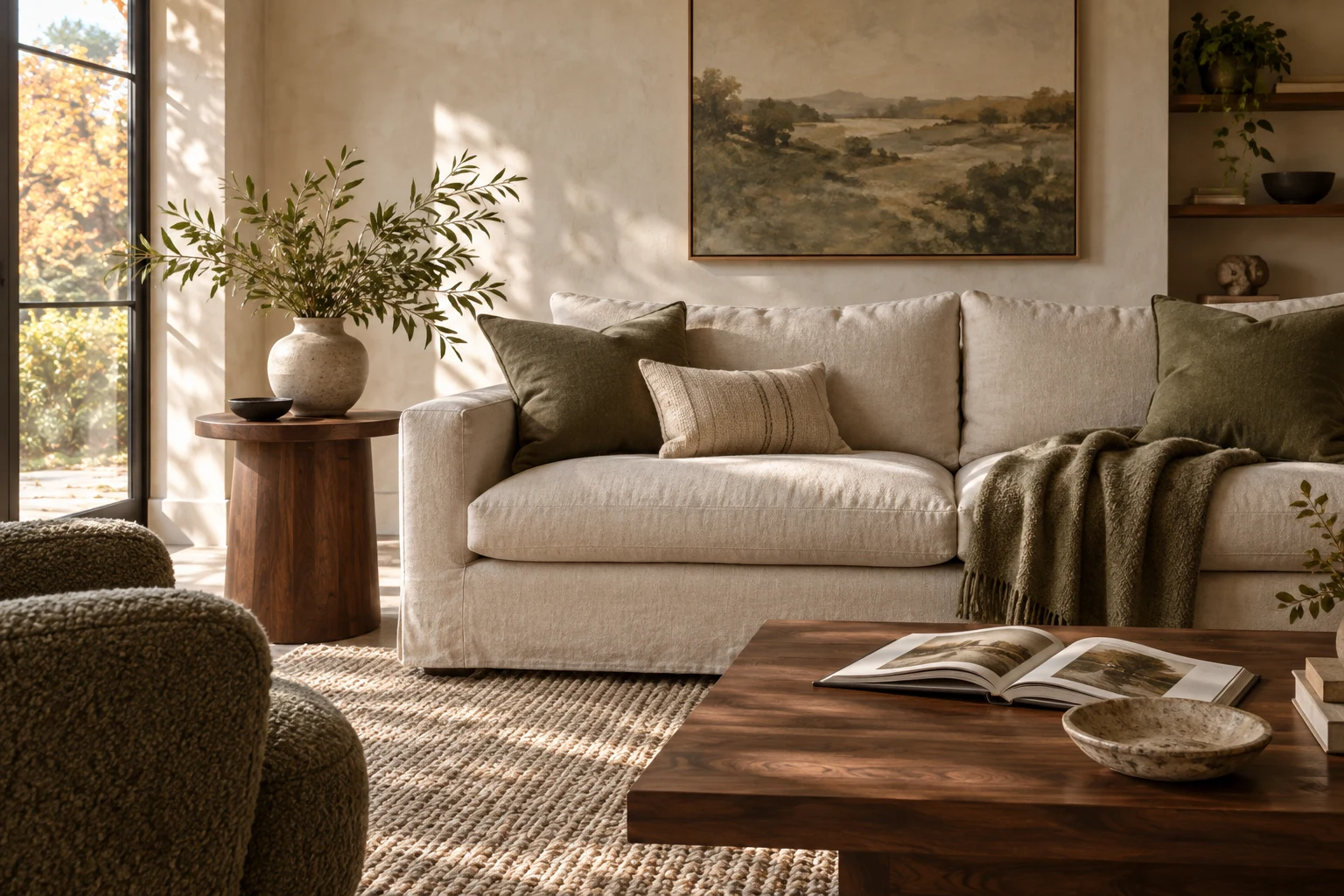
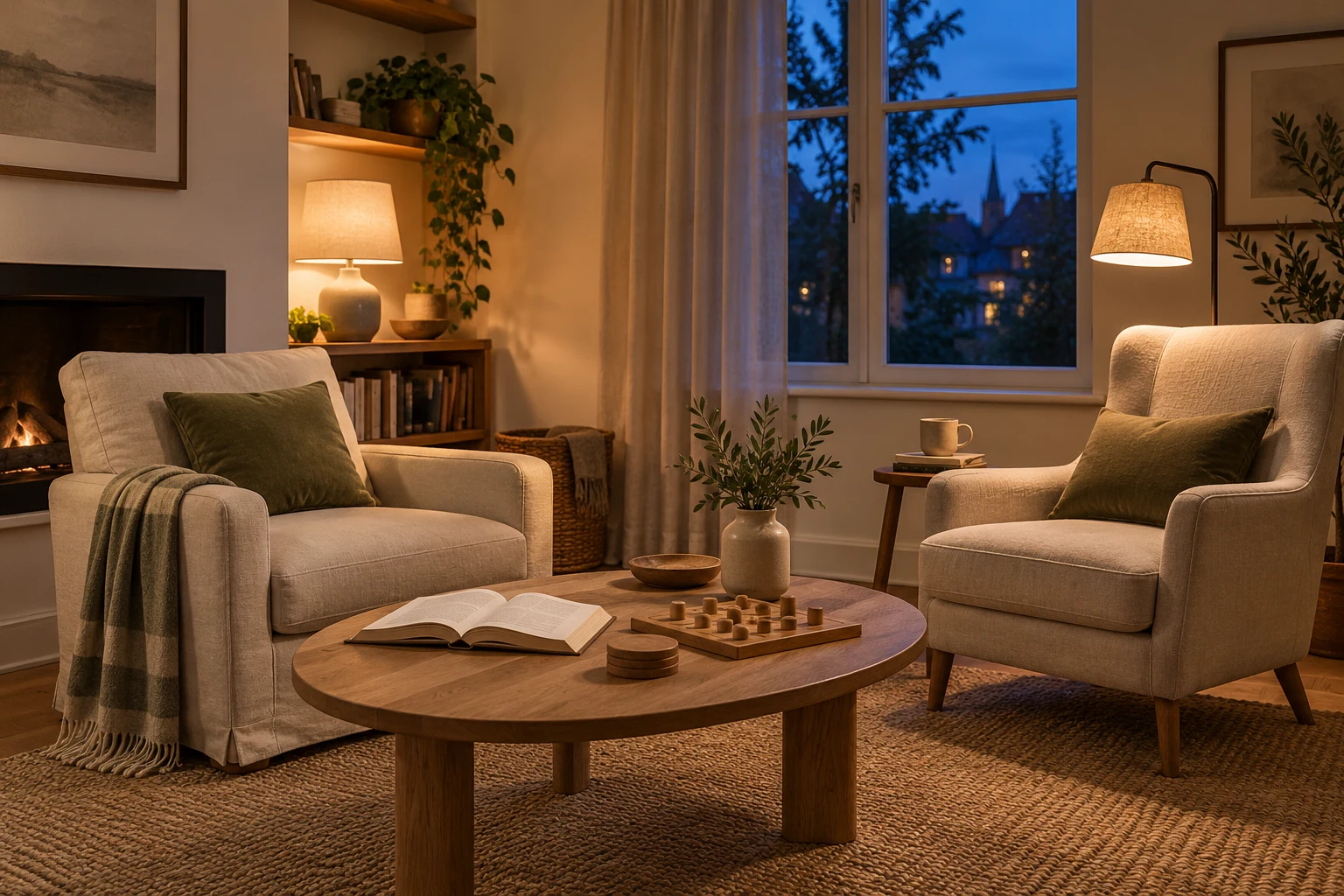
Stand where people enter and trace the room's strongest line of sight. If every chair points toward a screen, rotate one or two seats inward before buying anything. A rug, low table, window view, fireplace, artwork, or pair of lamps can establish a shared center without concealing the television.
Keep conversation distances comfortable for the room rather than forcing a perfect diagram. Test by sitting in every seat. You should be able to see another person without twisting, reach a surface without crossing the room, and move between seats without squeezing past sharp corners.
Sources: Houzz
Arrange for two, four, or six
For two people, angle a pair of chairs or a chair and sofa across a small shared surface. For four, form a loose U with the open side toward the main route. For six, add light movable seating instead of stretching the permanent furniture so far apart that conversation becomes work.
Floor cushions and stools are useful only if the intended guests can use them comfortably. Keep at least one supportive seat and make the arrangement easy to restore after the evening. If a game requires pieces, confirm the table is large and stable enough before making it the room's centerpiece.
| Group | Core layout | Surface | Flexible addition |
|---|---|---|---|
| Two | Two seats angled toward each other | One reachable side or coffee table | Portable reading or game light |
| Four | Sofa plus two inward-facing chairs | Clear central surface | Small tray for pieces or drinks |
| Six | Conversation grouping plus movable seats | Central table with unobstructed edges | Stools or chairs stored nearby, not in the path |
Sources: Houzz
Build one start-tonight activity kit
Choose an activity that matches the people, time, and attention available: a short card game, a puzzle tray, a stack of magazines, a drawing set, or a shared playlist with phones set aside afterward. Store the complete kit together. Searching for a missing pencil or score pad sends the room back toward the easiest screen.
Avoid turning the coffee table into permanent storage. A handled box, drawer, or nearby cabinet can hold the kit, while the surface stays available. If the activity uses candles, follow fire-safety guidance and keep them away from anything that can burn; battery lighting is a lower-maintenance option for a busy gathering.
Keep this in mind
- The activity can begin in under two minutes.
- Every required piece returns to the same container.
- The shared surface remains partly clear during use.
- Lighting reaches faces and the activity without glare.
- A comfortable seat remains available for anyone who needs one.
Sources: National Fire Protection Association
Keep the room flexible and secure
Flexible does not mean unstable. Nesting tables, rolling carts, and light chairs should be checked for wobble, working locks, pinched fingers, and trip hazards. Secure tall storage, televisions, and other tip-prone furniture according to manufacturer instructions and the wall construction.
CPSC's Anchor It guidance emphasizes anchoring furniture and televisions. Hiding a screen inside unsecured furniture can create a new hazard, so treat visual changes and physical stability as separate decisions. Once the paths are safe, use a basket or cabinet to reduce visual pull from remotes and cables rather than adding elaborate mechanisms.
Test one evening before redesigning
Move the existing seats, clear the table, put one activity out, and use the room for an hour. Notice where people drag chairs, where shadows fall, and which supplies leave the room. Those actions reveal the layout you need better than a styled plan.
Afterward, preserve the successful move and undo the rest. A side chair may need a permanent new angle; a game may need a dedicated drawer. If no one used the room differently, change the activity or timing before buying more furniture. The arrangement should support a real ritual, not perform one.
Sources: Houzz
Sources & further reading
Factual guidance is grounded in the sources below. Styling suggestions and decision aids are our editorial interpretation.
- 2026 U.S. Houzz Emerging Summer Trends ReportHouzz · Accessed October 1, 2026
- Anchor It!U.S. Consumer Product Safety Commission · Accessed October 1, 2026
- Candle SafetyNational Fire Protection Association · Accessed October 1, 2026
Written with care
Our aim is useful guidance, clear evidence, and considered choices. Found something that needs a second look? Tell us about a correction.