The useful part
- Begin with the light already in the room, then add one warm material and one earthy accent.
- Repeat a small set of colors and textures instead of filling every surface.
- Use the pause test before paint or furniture: live with the smaller changes in daylight and lamplight first.
A cool-toned room rarely needs a complete makeover. It usually needs a better balance between hard and soft surfaces, blue and yellow light, and pale finishes and grounded materials. The fastest route is to change what the eye reads first: the evening light, the largest textile, and one repeated natural tone.
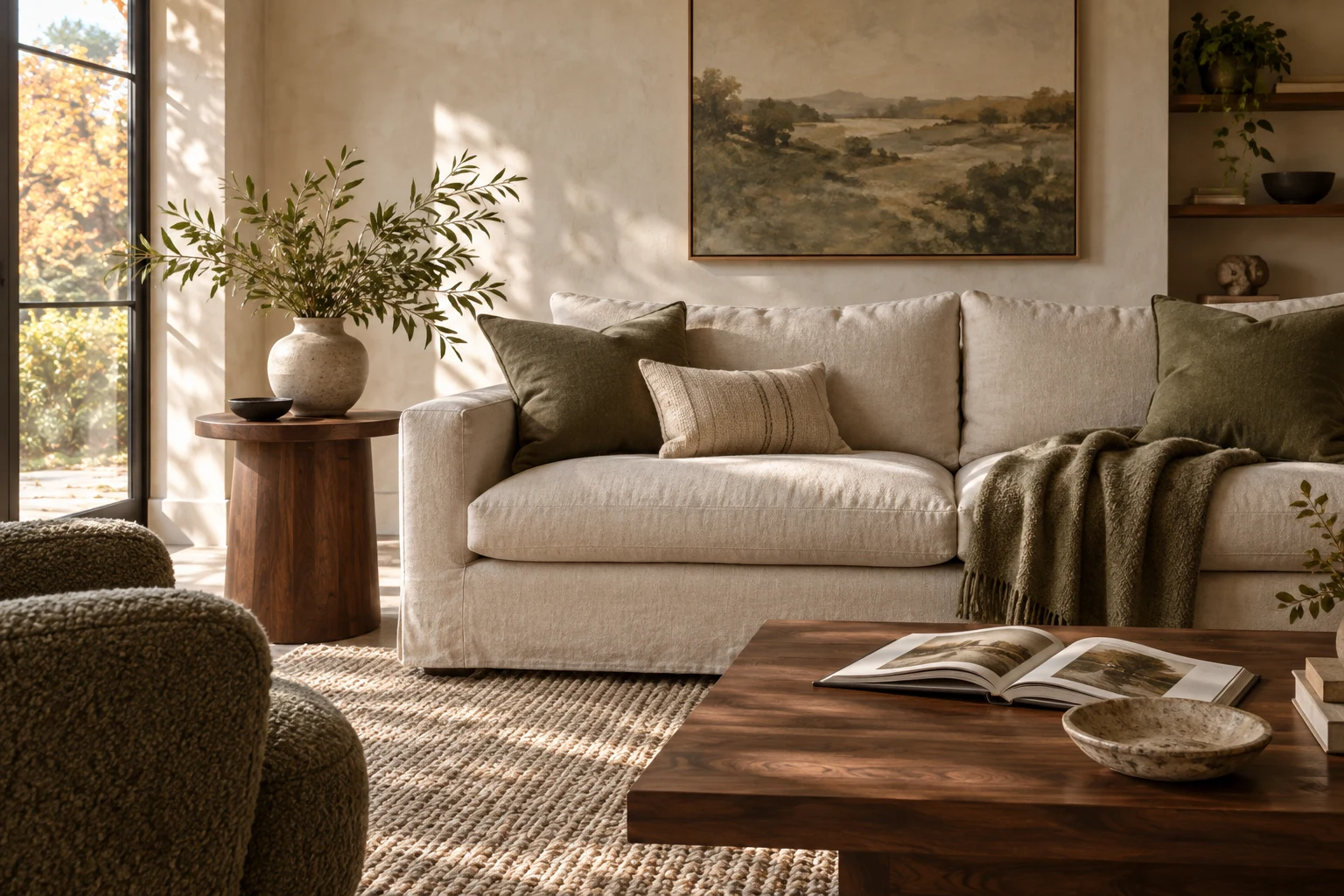
Warm wood, earthy color, natural materials, and layered texture appeared in Houzz's fall 2026 professional panel. That is a design-direction signal, not proof that every household wants the same palette. Use it as permission to work with warmth deliberately, then let the room's light, function, and pieces you already value set the final mix.
Find the source of the chill
Stand at the doorway in daylight, then look again after sunset with the lamps on. A room can feel cold because nearly every surface is pale and smooth, because its bulbs make colors appear stark, or because a single cool gray dominates the walls, rug, and upholstery. Name the strongest cause before buying anything.
Photograph the same view at both times and list the three largest visible surfaces. If all three are cool, you need contrast at scale. If the walls are warm but the room still feels flat, texture or lighting may do more than another color.
Keep this in mind
- Note which direction the windows face and when the room receives direct light.
- Record the color and texture of the walls, floor, largest upholstery piece, and rug.
- Check the lamp and bulb labels before assuming the fixture is the problem.
- Choose one feature to keep visually cool so the finished room retains contrast.
Sources: Houzz; U.S. Department of Energy
Climb the warmth ladder in order
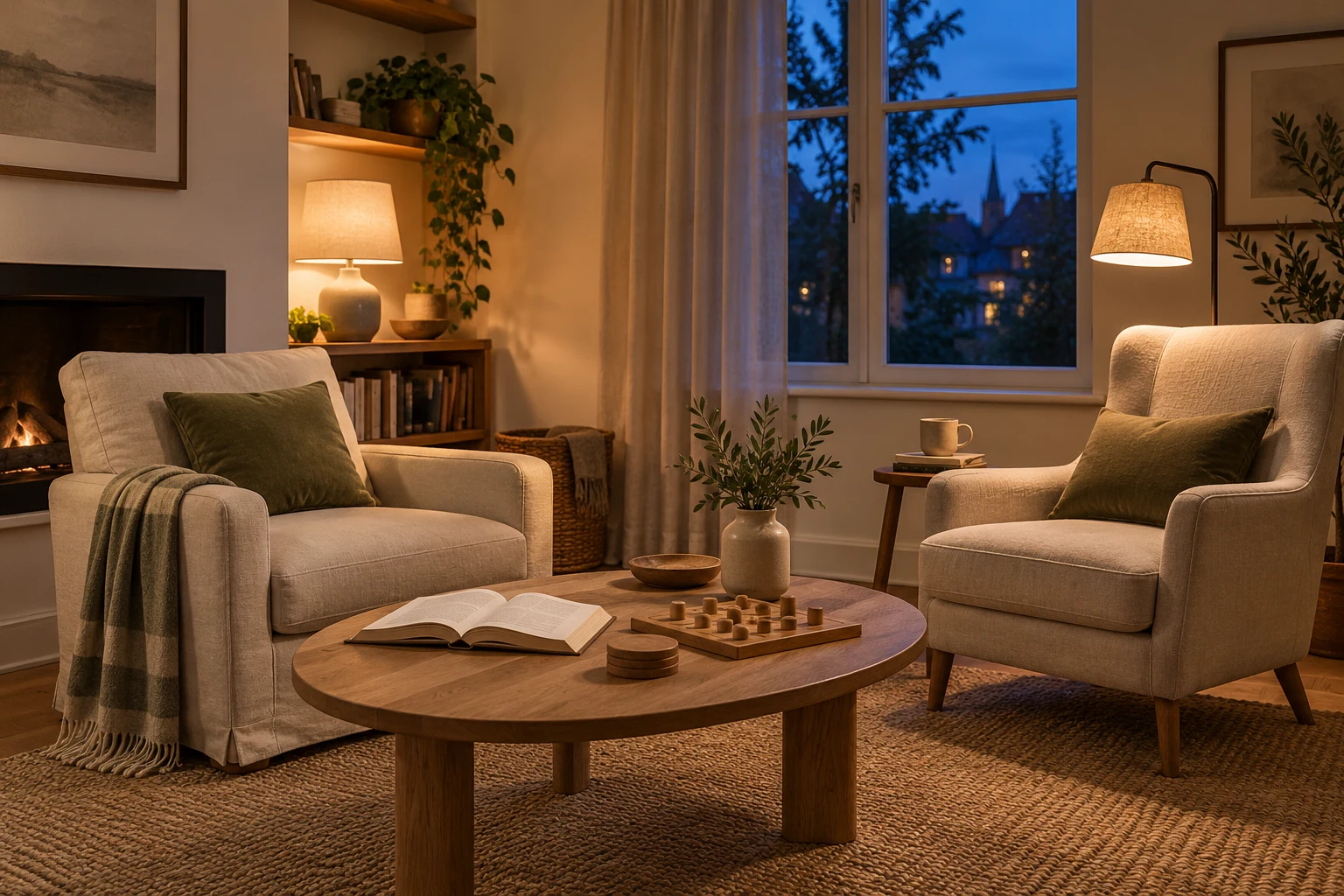
Start with reversible moves. First, tune the evening light: use shaded lamps at more than one height and select compatible bulbs whose appearance suits the room. The Department of Energy explains that LED color appearance is commonly described with correlated color temperature, while color rendering describes how colors appear under a source. Those measures are useful, but the fixture, shade, dimmer compatibility, and surrounding finishes still affect the result.
Second, introduce one natural-looking midtone through wood, woven fiber, leather, clay, or a convincing alternative. Third, repeat an earthy accent two or three times, perhaps in a cushion, artwork, and a small object. Only then consider a larger textile or paint. This order keeps a mood problem from becoming an unnecessary renovation.
| What you notice | First move | Larger move | Stop when |
|---|---|---|---|
| Harsh after dark | Add a shaded lamp and check bulb compatibility | Plan layered task and ambient lighting | Faces and fabrics look natural without dim corners |
| Flat and pale | Add a warm wood or woven tray | Bring in a medium-tone table or rug | The room has a clear anchor |
| Gray dominates | Repeat rust, ochre, olive, or warm cream | Sample a warmer wall color | The gray reads as contrast rather than the whole story |
| Hard and echoing | Add a throw, cushion, or curtain | Choose a correctly sized rug | Softness is visible but surfaces remain usable |
Sources: U.S. Department of Energy; Houzz
Make the reversible version count
Renters and cautious decorators can get a meaningful shift without paint. Replace a tiny cool-white lampshade with a larger fabric shade that safely fits the fixture, move a lamp into a dark corner, and gather small objects onto one wood or woven surface. A textile with warm and cool notes can connect existing gray upholstery to a new earthy accent without pretending the sofa is a different color.
Scale matters more than quantity. One throw cannot balance a wall of icy tile, but a curtain panel, larger rug, or broad piece of art might. Measure before shopping, preserve clear walking paths, and avoid leaning heavy mirrors or furniture where they can tip. The Consumer Product Safety Commission recommends anchoring furniture and televisions; follow manufacturer instructions and use suitable hardware for the wall.
Use repetition, then leave breathing room
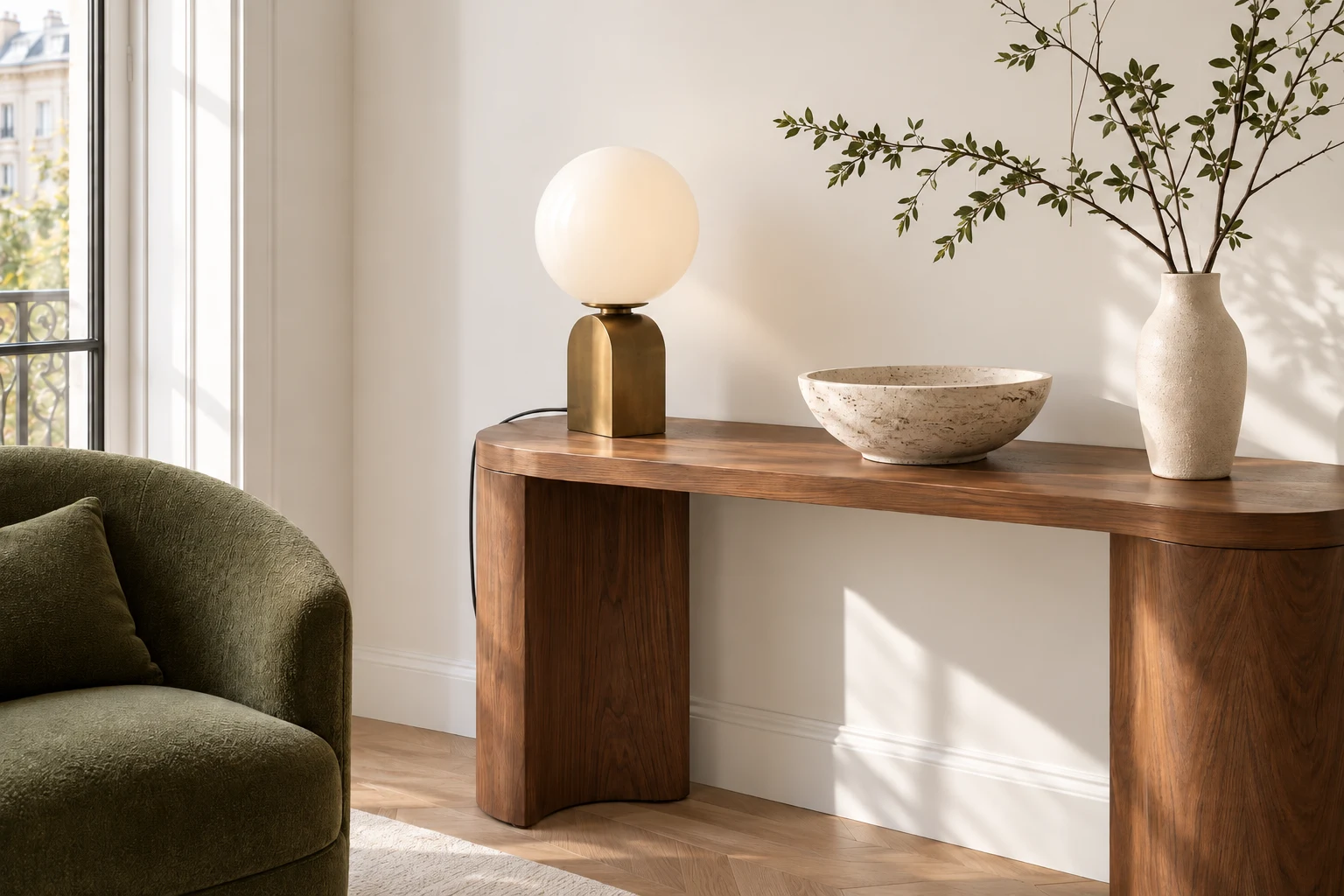
A warm room is not the same as a busy room. Pick one wood family, one metal emphasis, and two or three supporting colors. They do not have to match exactly; they should feel related enough that the eye can follow them around the room. A brass lamp can speak to a gold thread in a cushion without requiring brass on every handle.
After each layer, clear one horizontal surface and step back. If your eye lands everywhere at once, remove the smallest accent rather than adding another organizer. If the new pieces look isolated, repeat their color once across the room. The goal is a rhythm: anchor, echo, pause.
Sources: Houzz
Run a two-evening pause test
Live with the reversible changes for two evenings and one daylight period. Use the room normally. Can you read where you sit? Does the main surface still work? Does the earthy accent improve the existing cool tones, or fight them? Photograph the doorway view again instead of judging a single styled corner.
Move to paint, a rug, or furniture only when you can describe the remaining problem in one sentence. That sentence is the brief: the wall is still too blue after dark, the seating area lacks an anchor, or the hard floor needs softness. A precise brief makes the next change considered rather than merely new.
Sources: U.S. Department of Energy
Sources & further reading
Factual guidance is grounded in the sources below. Styling suggestions and decision aids are our editorial interpretation.
- 2026 U.S. Houzz Fall Design Trends ReportHouzz · Accessed October 1, 2026
- LED BasicsU.S. Department of Energy · Accessed October 1, 2026
- Anchor It!U.S. Consumer Product Safety Commission · Accessed October 1, 2026
Written with care
Our aim is useful guidance, clear evidence, and considered choices. Found something that needs a second look? Tell us about a correction.