The useful part
- Design around one real routine: read, move, or reflect.
- Protect clear floor space and useful light before adding accessories.
- A wellness corner can support a habit, but it is not a treatment or a promise of better health.
A useful wellness corner is less like a miniature spa and more like a well-placed invitation. It gives one quiet activity a dependable place, removes the two or three obstacles that usually stop it, and resets quickly enough to survive a busy week.
Houzz reported increased U.S. searches for wellness-room and related design terms in early 2026. That search signal shows interest in the idea, not proof that a dedicated room or a collection of products improves well-being. Start with the routine you already want to do and build only what helps it begin.
Choose the verb first
Write one sentence: this is where I will read for twenty minutes, stretch after work, or write before bed. A single verb clarifies whether you need a supportive chair, open floor, or a small writing surface. Combining all three can work later, but it often produces a crowded corner at the start.
Notice when the activity happens. Morning light may suit reading; evening reflection may need a shaded lamp. Movement needs safe clearance in every direction and a surface that will not slide. The corner should fit the routine's time and body position, not just its photograph.
| Routine | Essential space | Useful light | One storage rule |
|---|---|---|---|
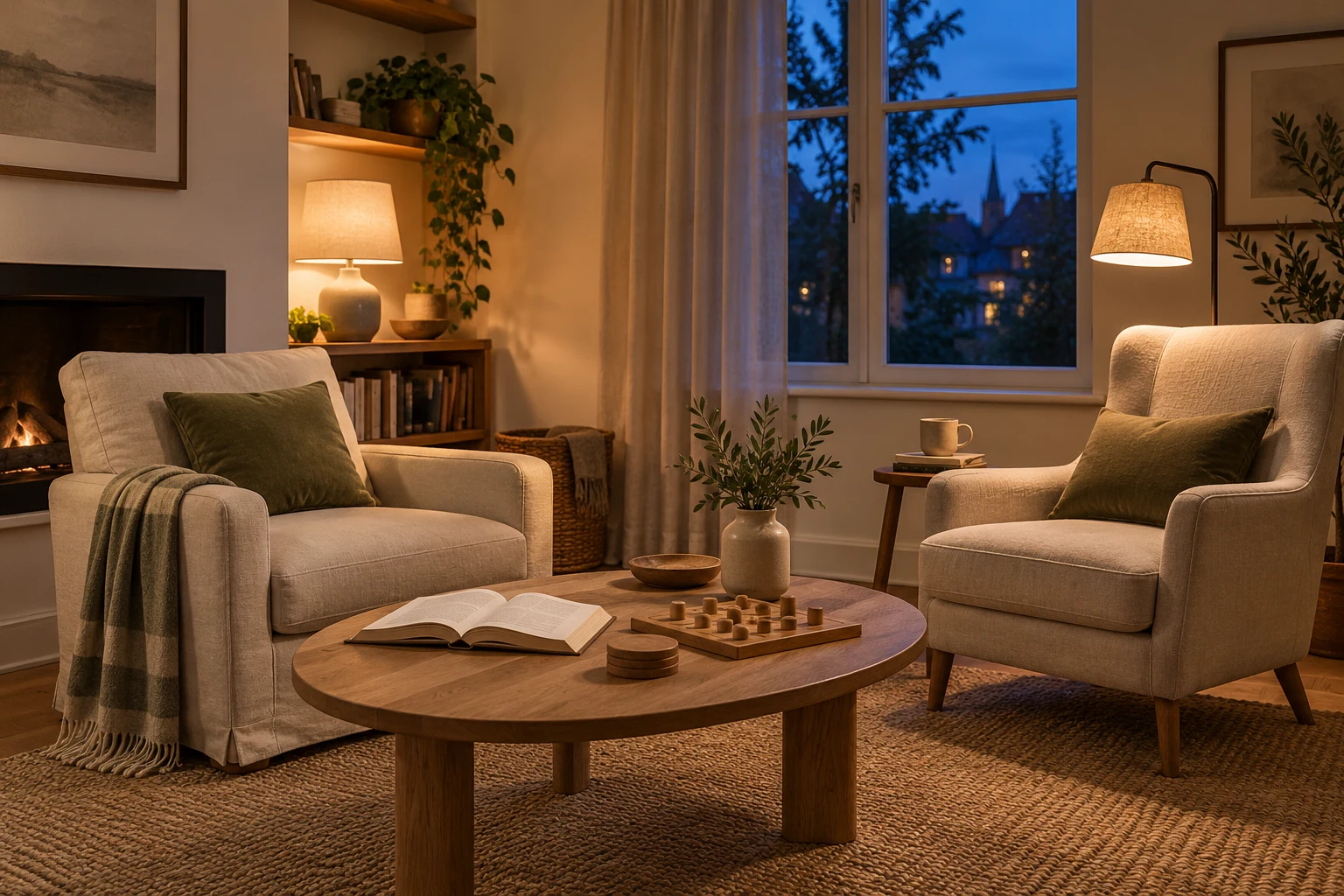
| Read | Supportive seat plus reach for a book | Glare-controlled task light | Current book stays visible; backlog lives elsewhere |
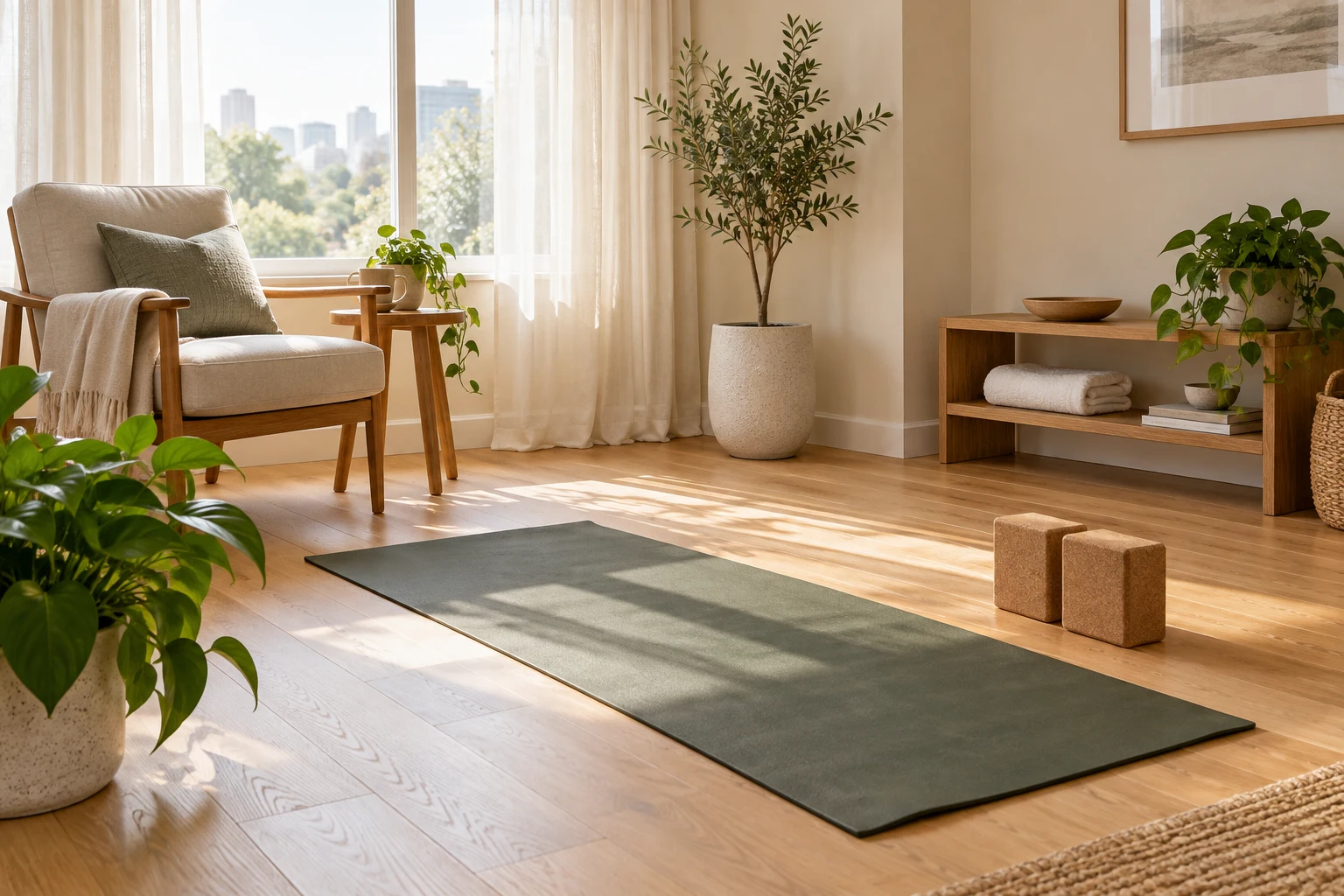
| Move | Clear floor around the full movement path | Even ambient light | All equipment fits in one closed or handled container |
| Reflect | Seat and stable writing surface | Soft task light that still supports writing | Notebook and pen return to one tray |
Sources: Houzz; U.S. Department of Energy
Measure the space your routine needs
Measure the chair, writing surface, or mat you intend to use, then allow room to approach it, change position, and leave comfortably. Movement needs clearance beyond the mat in every direction you will use. Mark that full area with painter's tape before moving furniture. Open doors, pull out drawers, and walk the normal route through the room to expose conflicts.
Borrow a corner rather than inventing a new room. The end of a bedroom, a landing with proper egress, or one side of a living room may already have the light and quiet you need. Keep heaters, vents, windows, electrical panels, and exits clear, and do not trade safe circulation for a styled boundary.
Keep this in mind
- Mark the full footprint and movement path.
- Confirm outlets can be reached without a cord crossing the walkway.
- Check daylight, glare, and privacy at the actual use time.
- Remove one unrelated object before adding any new one.
Sources: U.S. Department of Energy
Use light and air carefully
Layer daylight with a task lamp rather than relying on a bright ceiling fixture. DOE guidance distinguishes light appearance from color rendering; both can help you compare bulbs, while the fixture label and dimmer compatibility determine what is safe to use. Position the lamp so a page or work surface is lit without shining directly into your eyes.
A plant or air cleaner may look at home here, but neither should carry an unsupported wellness promise. EPA guidance says source control and ventilation with clean outdoor air are primary indoor-air strategies, with filtration as a supplement. A portable cleaner cannot remove every pollutant, and its room fit and replacement-filter requirements matter.
Sources: U.S. Department of Energy; U.S. Environmental Protection Agency
Run a seven-day friction audit
For one week, use the corner without trying to perfect it. Each time you skip the routine, record the immediate obstacle: no light, chair blocked, mat buried, phone within reach, room too loud. Solve only repeated friction. A basket may help if equipment migrates; it adds clutter if nothing needs containing.
End the week by removing anything that did not serve the activity. Keep the corner visually connected to the rest of the room through one repeated color or material, then leave a clear patch of floor or wall. The strongest sign of success is simple: the setup returns to ready in about a minute.
Sources: Houzz
Sources & further reading
Factual guidance is grounded in the sources below. Styling suggestions and decision aids are our editorial interpretation.
- 2026 U.S. Houzz Emerging Summer Trends ReportHouzz · Accessed October 1, 2026
- LED BasicsU.S. Department of Energy · Accessed October 1, 2026
- Air Cleaners and Air Filters in the HomeU.S. Environmental Protection Agency · Accessed October 1, 2026
Written with care
Our aim is useful guidance, clear evidence, and considered choices. Found something that needs a second look? Tell us about a correction.