This article provides general information drawn from the sources below. It has not received an independent specialist review and cannot account for your individual health or safety needs.
The useful part
- Add fiber through familiar fruits, vegetables, beans, peas, lentils, whole grains, nuts, and seeds rather than rebuilding every meal.
- Change one meal or snack at a time and observe tolerance; rapid increases do not suit everyone.
- Use the Nutrition Facts label to compare fiber per serving, while seeking clinical guidance for persistent or concerning digestive symptoms.
A food-first fiber plan can begin with one repeatable substitution: beans added to a familiar meal, fruit paired with breakfast, vegetables added to a sandwich, or a whole-grain option chosen when it fits. The aim is a pattern of ordinary foods, not a sudden challenge or a supplement-first solution.
NIDDK lists whole grains, legumes, fruits, vegetables, and nuts as fiber sources in its constipation guidance and advises adding fiber gradually so the body can adjust. That page addresses a digestive condition, so it is a starting reference rather than a personal prescription.
Find one reliable opening
Choose the meal or snack that repeats most often. Record what is already there, then identify one fiber-containing food that fits its flavor, preparation, storage, and cost. Breakfast might accept oats, fruit, nuts, seeds, or whole-grain bread. Lunch might accept beans, lentils, vegetables, or a whole-grain component.
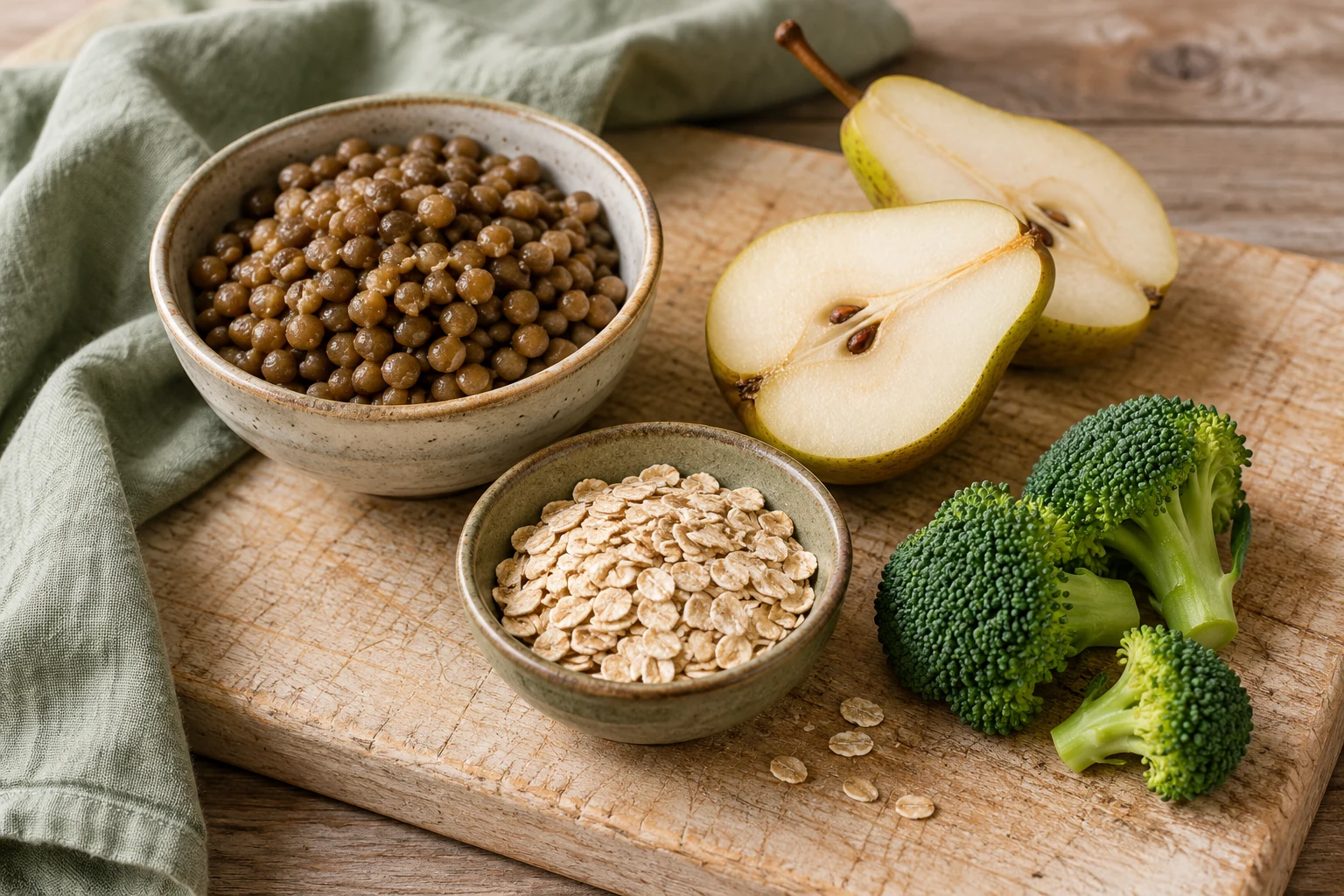
Cultural foods and pantry staples are assets. Lentils, chickpeas, black beans, split peas, barley, brown rice, corn, berries, pears, greens, squash, and many other foods can contribute. No single ingredient is mandatory, and fresh, frozen, canned, and dried options each have practical tradeoffs.
Sources: National Institute of Diabetes and Digestive and Kidney Diseases; U.S. Food and Drug Administration
Use substitutions that preserve the meal
Add or exchange one component rather than turning a familiar dish into a different one. Mix beans into part of a meat filling, add vegetables to soup, combine a refined and whole grain while adjusting, or pair a usual snack with fruit or nuts when appropriate. Small changes reveal taste and tolerance more clearly.
If using canned foods, compare labels for features relevant to your needs and prepare them according to directions. Medical conditions, allergies, or prescribed diets can change what is appropriate; ask a clinician if any apply.
| Usual moment | Small addition or swap | Preparation question | Observation |
|---|---|---|---|
| Breakfast | Fruit, oats, seeds, or whole-grain option | Is it ready on a busy morning? | Comfort and repeatability |
| Soup or bowl | Beans, lentils, vegetables, or whole grain | How will texture and storage change? | Portion tolerance |
| Sandwich or wrap | Vegetable, bean spread, or whole-grain choice | Does it remain easy to eat and pack? | Taste and access |
| Snack | Fruit, vegetables, nuts, seeds, or bean-based food | Are allergies or chewing needs relevant? | Satisfaction and symptoms |
Sources: National Institute of Diabetes and Digestive and Kidney Diseases
Compare labels on the same basis
For packaged foods, start with serving size, then find dietary fiber and Percent Daily Value. Compare similar foods using a realistic amount you would eat. Also read the ingredient list and any fields important to your dietary needs; one front-of-package phrase does not describe the entire food.
FDA explains that the Nutrition Facts label is intended to support informed choices and that serving size and nutrient information belong together. A fiber claim does not establish that a product suits an allergy, medical condition, budget, taste, or preferred level of processing.
Keep this in mind
- Check serving size before comparing fiber numbers.
- Compare similar products using the amount you realistically eat.
- Read ingredients and allergen information.
- Note preparation, storage, texture, and household acceptance.
- Avoid treating one nutrient as a complete rating of the food.
Sources: U.S. Food and Drug Administration
Change gradually and observe
Add one change, keep it steady for several days as appropriate, and note comfort, preparation burden, and whether the food remained enjoyable. NIDDK advises adding fiber a little at a time. Fluid needs vary, and people with fluid restrictions or medical conditions should follow their clinician’s guidance rather than generic hydration advice.
If a food change causes severe, persistent, or concerning symptoms, seek medical advice. Do not use this guide to self-treat a diagnosed digestive condition.
Sources: National Institute of Diabetes and Digestive and Kidney Diseases
Build the next week from what worked
At week’s end, keep the substitution that was easy to prepare, acceptable to eat, and comfortable. Then choose one new opening if desired. Variety can grow over time through different beans, grains, fruits, vegetables, nuts, and seeds rather than through a large one-time increase.
A supplement may be discussed with a clinician or dietitian when food changes are insufficient or inappropriate, but it is a separate decision with ingredient, interaction, fluid, and dosing questions. This article’s useful endpoint is a sustainable food pattern and a clear boundary for symptoms, not a universal target.
Sources: National Institute of Diabetes and Digestive and Kidney Diseases; U.S. Food and Drug Administration
Sources & further reading
Factual guidance is grounded in the sources below. Styling suggestions and decision aids are our editorial interpretation.
- Eating, Diet, & Nutrition for ConstipationNational Institute of Diabetes and Digestive and Kidney Diseases · Accessed October 1, 2026
- The Nutrition Facts LabelU.S. Food and Drug Administration · Accessed October 1, 2026
Written with care
Our aim is useful guidance, clear evidence, and considered choices. Found something that needs a second look? Tell us about a correction.