This article provides general information drawn from the sources below. It has not received an independent specialist review and cannot account for your individual health or safety needs.
The useful part
- Select a tested recipe from the National Center for Home Food Preservation or a comparable research-based extension source.
- Do not casually reduce salt or alter ingredient proportions; equipment cannot make an untested method safe.
- Keep the exact recipe beside you and follow its container, temperature, time, monitoring, and storage directions.
The safest first fermentation project begins with a recipe, not a jar kit or a social-media shortcut. A tested method specifies the produce, salt or brine, container, environment, time, and storage that work together. Changing one piece can change the result.
Pinterest's 2026 forecast included fermented-cabbage interest using global English-language searches from an earlier observation window. Those signals explain editorial timing; they do not validate a recipe. The National Center for Home Food Preservation and university extension guidance provide the practical authority.
Choose one tested recipe without remixing it
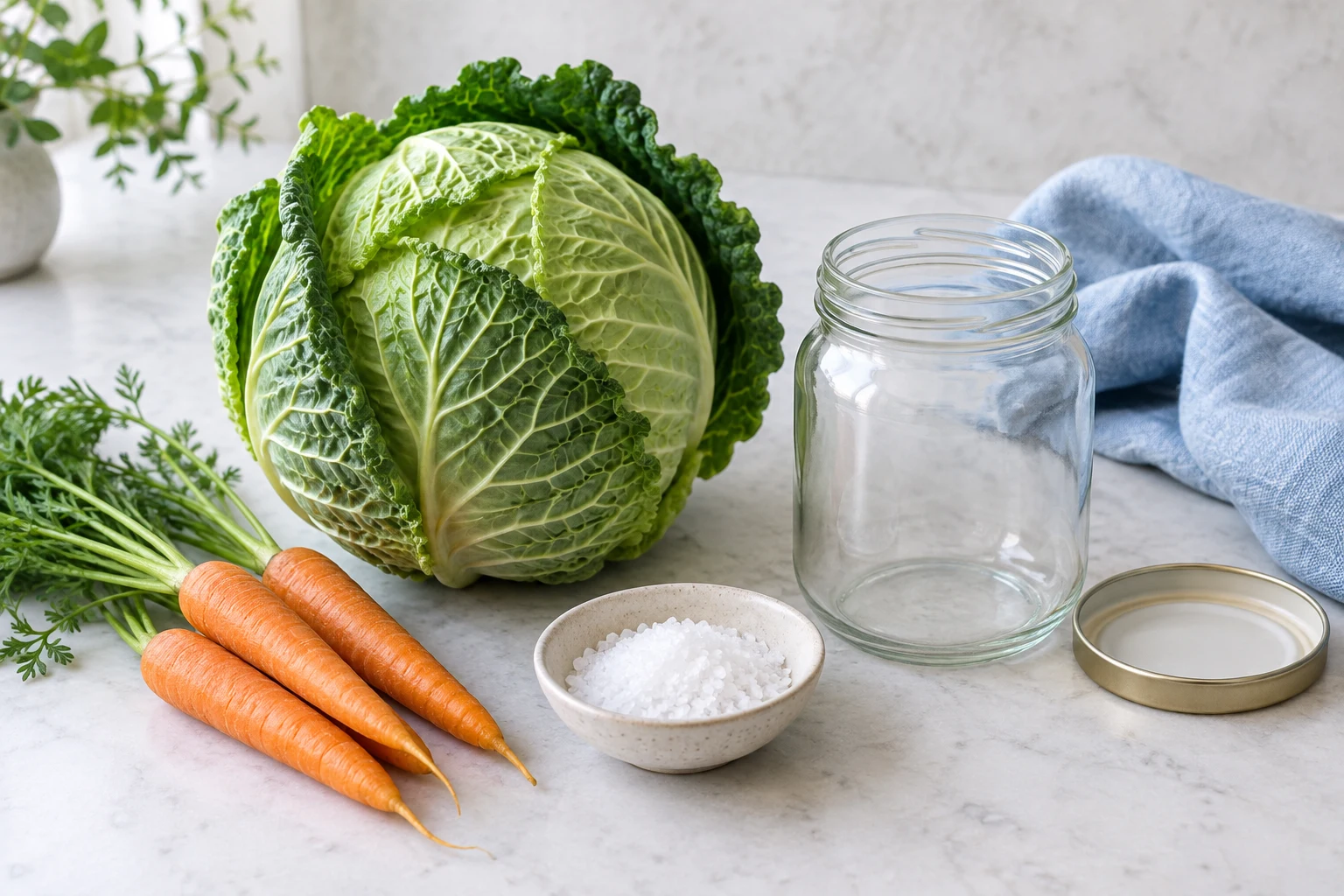
Begin with a complete current recipe for a specific food, such as the NCHFP sauerkraut or fermented-pickle guidance. Read it from beginning to end and confirm that your ingredient amount, container capacity, room conditions, and storage plan fit before chopping anything.
NCHFP advises using recipes with tested proportions and warns against reducing the salt required for fermented sauerkraut or brined pickles. Salt contributes to safety and texture in those processes. Do not substitute salt type, change batch scale, or add low-acid ingredients unless the tested recipe explicitly allows it.
Sources: National Center for Home Food Preservation; University of Minnesota Extension
Treat equipment as workflow support
Use a food-grade container of the material and size specified by the recipe, free of cracks or damage. A scale can improve accurate measurement when the recipe uses weight. Weights and airlocks can help maintain the intended environment when used correctly, but they do not compensate for wrong proportions or contaminated ingredients.
Clean hands, surfaces, and equipment as directed. Select fresh, sound produce and prepare it exactly as the method says. Keep the recipe visible so memory does not replace a measured step.
Keep this in mind
- Current tested recipe selected and printed or saved
- Correct produce quantity and condition
- Specified salt type and exact amount
- Food-grade undamaged container of adequate size
- Recipe-approved weight, cover, or airlock setup
- Thermometer or pH tools only when the method calls for them
- Refrigerator space ready for finished storage
Sources: National Center for Home Food Preservation; University of Minnesota Extension
Use stop-and-go gates, not guesswork
Go only when the ingredients, proportions, container, and ambient range match the recipe. During fermentation, keep the food covered by brine and monitor the conditions in the manner the recipe specifies. Do not taste an uncertain ferment as a safety test.
Stop when the method's conditions are not maintained, when there is evidence of spoilage described by the authority, or when you cannot establish what happened. NCHFP advises discarding a batch if pickles become soft or slimy or develop a disagreeable odor. Do not attempt to rescue a suspect batch by adding salt, vinegar, or heat after the fact.
| Gate | Go when | Stop when |
|---|---|---|
| Recipe | Current research-based method is complete | Source or proportions are unclear |
| Ingredients | Type, amount, and condition match | Salt or acid has been reduced or improvised |
| Container | Food-grade, sound, correctly sized | Cracked, reactive, or too small |
| Process | Temperature, coverage, time, and monitoring stay within directions | Conditions fall outside the method or history is unknown |
| Finish | Recipe's completion and storage directions are met | Spoilage signs or uncertain safety appears |
Sources: National Center for Home Food Preservation; University of Minnesota Extension; National Center for Home Food Preservation
Do not turn a pH strip into permission to improvise
University of Minnesota Extension describes monitoring acidity as part of its produce-fermentation process and supplies specific targets within that method. A single reading does not prove every part of an altered batch followed a safe process, and consumer tools have handling and accuracy limits.
Use pH measurements only as directed by the research-based method, with the specified sampling and interpretation. Do not use a favorable number to override wrong salt, contaminated equipment, inadequate time, or visible spoilage.
Sources: University of Minnesota Extension
Finish, store, and review the exact method
When the tested recipe says fermentation is complete, package and refrigerate or process the food exactly as directed. Label the product and date. Clean the equipment, note the actual temperature and timing, and keep the source with the record so the batch can be understood later.
Keep the batch notes with the recipe so you can repeat the method accurately. Equipment can make the work easier, but it cannot compensate for changes to a tested process.
Sources: National Center for Home Food Preservation; University of Minnesota Extension
Sources & further reading
Factual guidance is grounded in the sources below. Styling suggestions and decision aids are our editorial interpretation.
- Pinterest Predicts 2026 Trend ReportPinterest · Accessed October 1, 2026
- General Information on FermentingNational Center for Home Food Preservation · Accessed October 1, 2026
- Preserving Food at Home: FermentationUniversity of Minnesota Extension · Accessed October 1, 2026
- Dill PicklesNational Center for Home Food Preservation · Accessed October 1, 2026
Written with care
Our aim is useful guidance, clear evidence, and considered choices. Found something that needs a second look? Tell us about a correction.