This article provides general information drawn from the sources below. It has not received an independent specialist review and cannot account for your individual health or safety needs.
The useful part
- Identify whether light, sound, temperature, bedding, or access is the main friction before buying a solution.
- Test a reversible change with items you own, then compare fit, installation, cleaning, noise, controls, and return terms.
- Comfort changes can support a room but do not diagnose or guarantee better sleep.
This is a research-based buying guide. We explain the criteria and tradeoffs; we do not claim hands-on testing. Read our process.
A bedroom comfort project works best as a sequence, not a shopping list. Identify the disturbance that is frequent, controllable, and most disruptive; make one reversible change; and observe the room for several nights. When everything changes at once, you cannot tell what helped or what created a new problem.
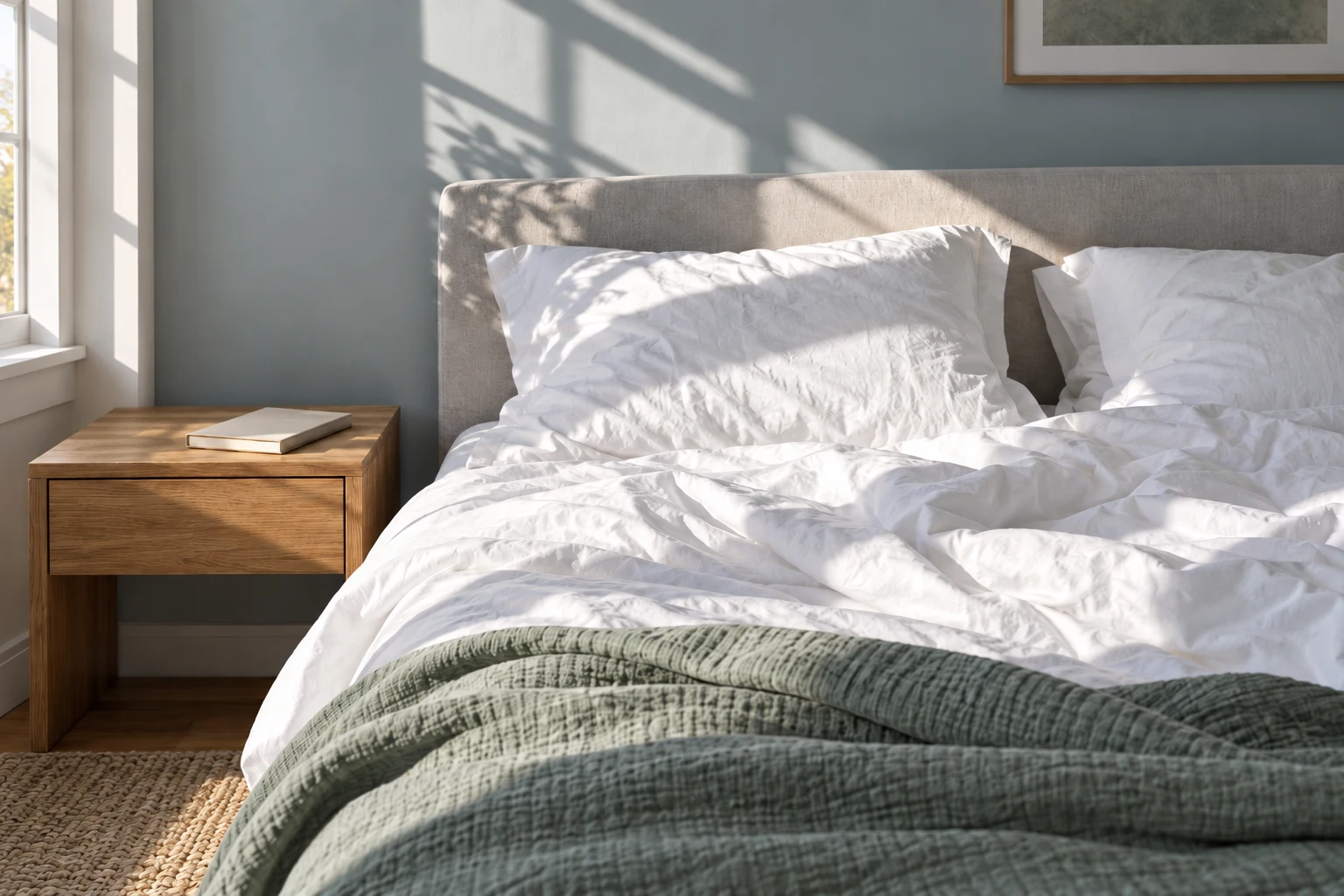
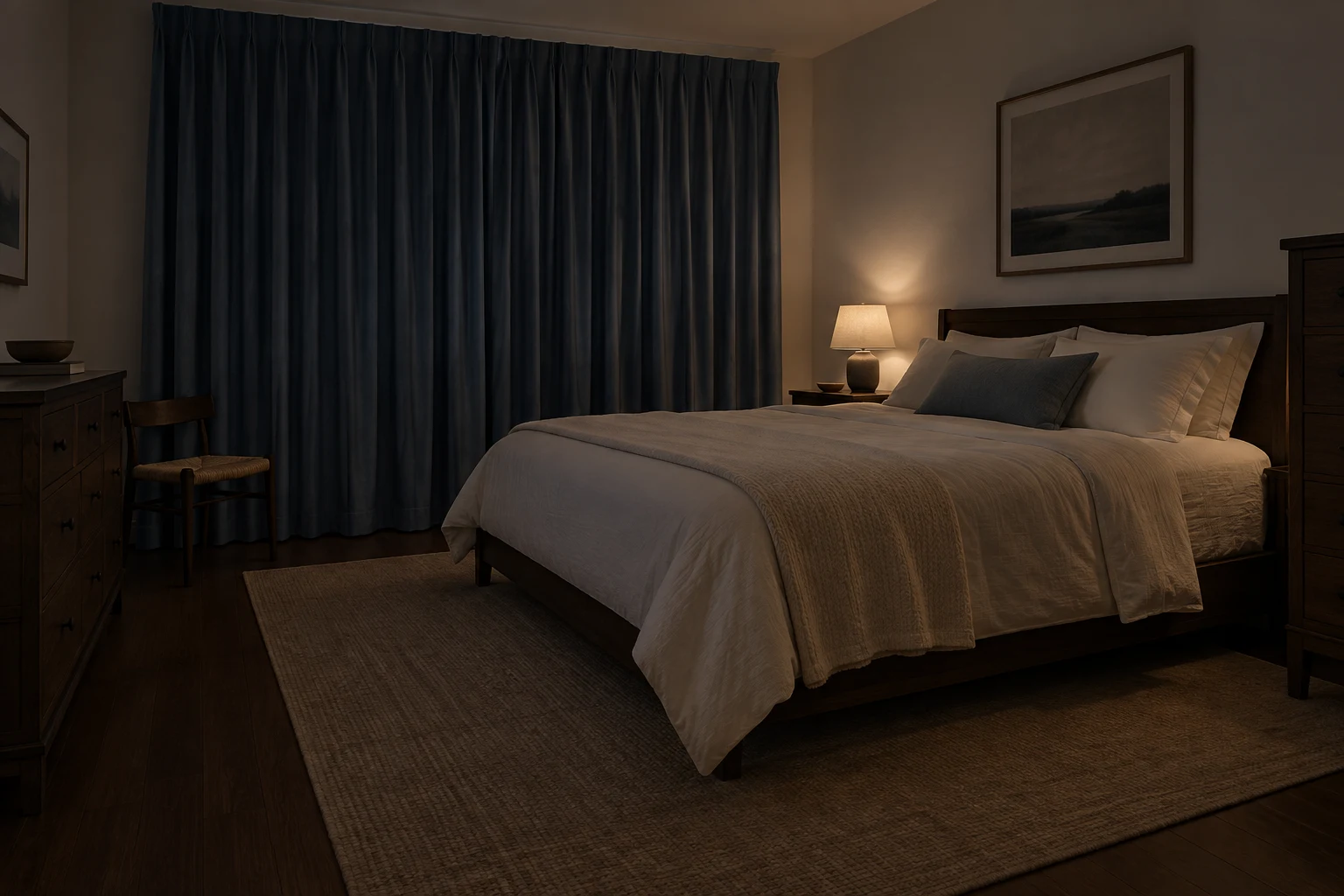
NHLBI includes a cool, quiet, dark bedroom among general healthy-sleep habits. That supports attention to the environment but does not prove that blackout curtains, sound machines, fans, or new bedding will treat a sleep problem. This guide compares criteria rather than endorsing a named product.
Audit the room from the bed
At the time you usually settle in, note each visible light source, recurring sound, draft or heat source, uncomfortable contact point, and obstacle between the bed and door or bathroom. Include device indicators, streetlight edges, HVAC cycles, household schedules, pets, and the practical need to hear alarms or another person.
Rank each issue by frequency, control, and consequence. A bright charger that appears nightly may be easier to address than occasional traffic. A dark hallway may be undesirable when balance, vision, caregiving, or nighttime mobility makes safe navigation more important than maximum darkness.
Keep this in mind
- Observe the room at the usual sleep time.
- List light, sound, temperature, contact comfort, and access issues separately.
- Mark which alerts and pathways must remain available.
- Choose one frequent, controllable variable for the first test.
- Photograph or measure the area before ordering an installed item.
Sources: National Heart, Lung, and Blood Institute; National Heart, Lung, and Blood Institute; National Heart, Lung, and Blood Institute
Compare the tradeoffs behind each solution
Begin with a no-purchase test: cover or reposition a nonessential indicator safely, close an existing curtain, adjust an available thermostat or fan setting, move a noisy object, or change a removable bedding layer. Never cover heat-producing equipment, ventilation, or a device contrary to its instructions.
If the test identifies a useful category, compare the exact fit and burden. Curtains require measurements, mounting, wall compatibility, and safe cords. Sound devices introduce volume, electrical, cleaning, and alert-masking questions. Fans add airflow, noise, placement, guard, and cord concerns. Bedding depends on size, material, laundering, skin comfort, and mobility.
| Friction | No-purchase test | Buying criteria | Main tradeoff |
|---|---|---|---|
| Unwanted light | Reposition or safely block a nonessential source | Dimensions, opacity, mounting, cord safety, returns | Darkness versus safe navigation and morning light |
| Intermittent sound | Close door or move source if practical | Sound character, volume range, timers, cleaning | Masking alerts or disturbing others |
| Heat or stale feeling | Adjust existing safe controls | Airflow, controls, stability, electrical rating | Noise, drafts, cords, energy use |
| Bedding discomfort | Remove or swap one existing layer | Material, size, care, return hygiene terms | Temperature, texture, mobility, upkeep |
Measure installation and daily handling
For window treatments, measure the actual window and intended coverage, note wall construction, check hardware instructions, and keep cords inaccessible to children. Renters should confirm permitted mounting. For plug-in products, use listed equipment as directed, keep cords out of paths, and do not overload outlets or extension arrangements.
Every product also needs a daily-use test. Can controls be found in low light? Can the item be cleaned and moved safely? Does it block a vent, door, mobility aid, or caregiver access? Can someone with limited grip, reach, hearing, or vision operate it? Installation quality and accessibility matter as much as the headline feature.
Run a one-variable comfort test
Use the change for several representative nights and record only what matters: whether the original disturbance occurred, whether the change introduced a new one, and whether operation was easy. Weather, illness, schedule, and household disruptions can confound a short trial, so avoid declaring success from one night.
Keep packaging and return information until fit is settled. If the item fails, name why: light leaks at the side, controls are inaccessible, sound masks an alarm, fabric feels uncomfortable, or maintenance is too demanding. That evidence improves the next choice without turning the room into a series of speculative purchases.
Know what the room cannot answer
Persistent sleep difficulty, loud snoring or gasping, or daytime sleepiness warrants clinician discussion. A room change cannot diagnose the cause.
Start with one identified friction, one reversible change, and no new barrier to safety or access.
Sources & further reading
Factual guidance is grounded in the sources below. Styling suggestions and decision aids are our editorial interpretation.
- Healthy Sleep HabitsNational Heart, Lung, and Blood Institute · Accessed October 1, 2026
- Window Covering CordsU.S. Consumer Product Safety Commission · Accessed October 1, 2026
- Insomnia — DiagnosisNational Heart, Lung, and Blood Institute · Accessed October 1, 2026
- Sleep Apnea — SymptomsNational Heart, Lung, and Blood Institute · Accessed October 1, 2026
Written with care
Our aim is useful guidance, clear evidence, and considered choices. Found something that needs a second look? Tell us about a correction.