This article provides general information drawn from the sources below. It has not received an independent specialist review and cannot account for your individual health or safety needs.
The useful part
- A bedtime buffer is a short protected transition, not an elaborate ritual or a treatment for insomnia.
- Audit the last hour for unfinished tasks, screen drift, lighting, noise, temperature, and morning preparation before buying anything.
- Change one source of friction at a time and seek clinical help when sleep difficulty is persistent, severe, or affecting safety.
When evenings run late, the useful goal is not a perfect routine. It is a visible stopping point between the last demand of the day and the time you expect to sleep. A small buffer can hold tomorrow’s loose ends, basic preparation, and one quiet activity so those tasks do not keep expanding into bed.
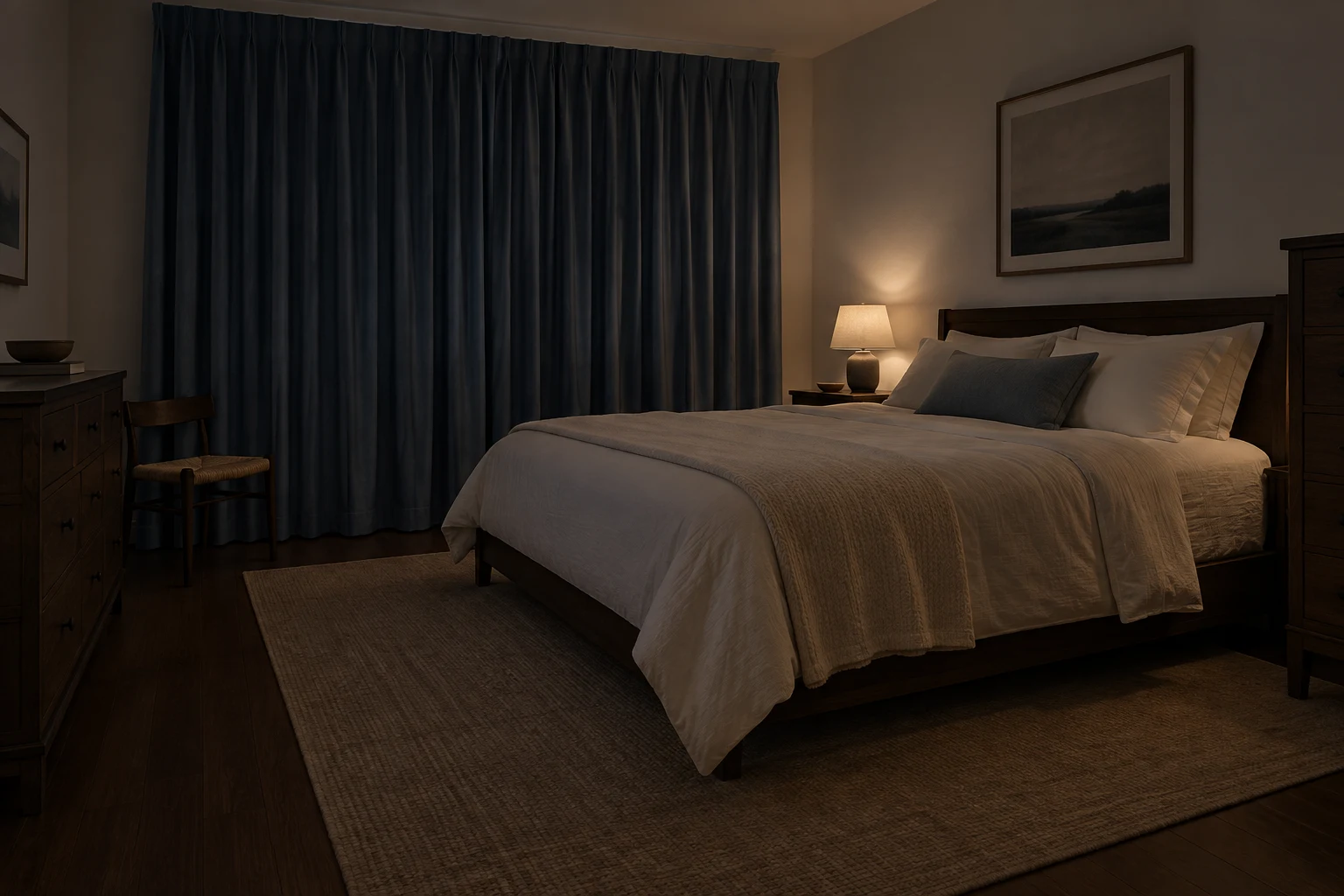
NHLBI recommends a consistent sleep schedule, a quiet hour before bed, less bright artificial light, and a cool, quiet, dark bedroom as general healthy-sleep habits. Those steps can support an environment; they do not diagnose or cure a sleep disorder.
Choose the boundary you can see
Work backward from the time you intend to be in bed and reserve a modest interval you can defend most nights. Give it a start cue: closing the kitchen, setting an alarm, plugging in a laptop, or finishing a pet-care task. The cue should mark that new work waits unless it is truly urgent.
Keep the buffer small enough to repeat. If an hour is unrealistic, begin with a shorter interval that contains only the essentials. Do not borrow from needed sleep to perform a long wellness checklist. A buffer succeeds when it reduces decisions and stimulation, not when it becomes another standard to fail.
Sources: National Heart, Lung, and Blood Institute; American Academy of Sleep Medicine
Run a seven-night friction audit
For seven nights, record when the buffer began, what delayed it, where the phone charged, the strongest light in use, and what unfinished task followed you toward bed. Add a simple morning note about whether the setup felt workable. Do not turn the diary into a minute-by-minute sleep score.
Look for repeated friction. If laundry decisions appear four nights, prepare clothing earlier. If the phone returns to bed because it is the alarm, try an existing clock before buying anything. If a child, partner, shift, symptoms, or caregiving defines the schedule, design around that reality rather than copying a routine built for someone else.
| Friction | What to observe | Small experiment | What not to assume |
|---|---|---|---|
| Unfinished tasks | Which item reopens the day? | Write tomorrow’s first step | A longer routine will solve workload |
| Screen drift | Where and why use continues | Choose a charging place or stopping cue | All screen use affects everyone identically |
| Bright or uneven light | Which fixture stays on | Use an existing lower, safe light | A special bulb treats sleep problems |
| Noise or temperature | What is controllable | Change one room variable | Comfort equipment guarantees sleep |
Sources: National Heart, Lung, and Blood Institute; American Academy of Sleep Medicine
Give the buffer three jobs
First, close the day: capture tomorrow’s first task and put away active work. Second, prepare the environment: handle medication or device routines as already directed, set the room, and place needed morning items. Third, choose one low-demand activity such as reading, quiet music, or simple personal care.
Keep safety and access intact. Hallways, stairs, and bathrooms still need enough light for safe movement. A household member who relies on a phone for care, emergency alerts, accessibility, or medical technology should not follow generic advice to move it away without a workable alternative. The arrangement should reduce friction without cutting off support.
Keep this in mind
- Close or capture unfinished work.
- Prepare one morning item that otherwise delays bedtime.
- Place essential devices and alerts where they remain usable.
- Set one comfortable room variable using what you own.
- Choose one quiet activity with a natural stopping point.
Sources: National Heart, Lung, and Blood Institute; National Heart, Lung, and Blood Institute; National Heart, Lung, and Blood Institute
Create a late-night minimum
Decide in advance what remains when the evening overruns: essential care, a brief tomorrow note, necessary safety checks, and bed. Skip optional chores and do not compensate with a complicated relaxation sequence. The minimum version protects the transition without demanding that you manufacture more time.
If late nights come from a recurring structural issue, name it accurately. Shift work, caregiving, housing conditions, pain, or untreated symptoms are not solved by a prettier nightstand. Some constraints call for workplace, household, accessibility, or clinical support rather than another habit.
Review the pattern without self-diagnosing
After seven nights, keep the change that reduced friction and test one other variable if needed. A tracker is optional and cannot explain every waking, stage, or symptom. Subjective notes about routine and function may be enough to prepare a useful conversation.
Persistent sleep difficulty, loud snoring or gasping, or daytime sleepiness warrants clinician discussion. A bedtime buffer can organize the evening; it cannot diagnose the cause of a sleep problem.
Sources & further reading
Factual guidance is grounded in the sources below. Styling suggestions and decision aids are our editorial interpretation.
- Healthy Sleep HabitsNational Heart, Lung, and Blood Institute · Accessed October 1, 2026
- Americans Are Doomscrolling at Bedtime, Prioritizing Screen Time Over SleepAmerican Academy of Sleep Medicine · Accessed October 1, 2026
- Insomnia — DiagnosisNational Heart, Lung, and Blood Institute · Accessed October 1, 2026
- Sleep Apnea — SymptomsNational Heart, Lung, and Blood Institute · Accessed October 1, 2026
Written with care
Our aim is useful guidance, clear evidence, and considered choices. Found something that needs a second look? Tell us about a correction.