The useful part
- Organize by flavor function rather than collecting bottles: acid, bitter or spice, body, finish, and dilution.
- Read serving size, added sugars, caffeine, ingredients, and storage directions on packaged mixers.
- Start with a measuring tool, stirring vessel, strainer, and glassware you already own; add specialized tools only when a repeated drink needs them.
An alcohol-free home bar feels grown-up when it offers structure, not imitation. A bright acid, a bitter or spiced note, enough body, and a deliberate finish can make a drink feel complete without depending on a long ingredient list or a syrup-heavy pour.
The National Restaurant Association's 2026 culinary forecast highlighted low- and no-alcohol beverages, and an industry brand forecast pointed to more intricate mocktails. Both are timing signals, not U.S. household purchase studies or evidence that a particular mixer is healthy. Build the bar from labels, flavor, storage, and actual hosting needs.
Build four flavor functions
Acid brings lift through citrus or another recipe-appropriate sour element. Bitter or spice adds length and contrast. Body can come from tea, juice, fruit, texture, or a packaged alcohol-free base. Finish may be herbs, peel, carbonation, aroma, or a measured garnish. Water and ice control dilution and temperature.
Not every drink needs all four at equal strength. Start with acid and body, add bitter or spice in small measured steps, then finish. Write down the amounts so a successful drink can be repeated and its serving size can be understood.
| Function | What it does | Examples to consider | Label or handling check |
|---|---|---|---|
| Acid | Brightens and balances | Fresh citrus or recipe-specified acid | Freshness, allergies, food handling |
| Bitter or spice | Adds contrast and length | Tea, spice infusion, labeled bitter mixer | Caffeine, ingredients, serving size |
| Body | Gives the drink weight | Unsweetened tea, juice, fruit, alcohol-free base | Added sugars, storage after opening |
| Finish | Adds aroma and texture | Herb, peel, carbonation, garnish | Wash produce; keep garnish practical |
Sources: National Restaurant Association; U.S. Food and Drug Administration; Centers for Disease Control and Prevention
Choose tools by repeated use
A measuring spoon or jigger supports consistency. A pitcher or mixing glass handles stirring; use a drink shaker according to its instructions if a recipe calls for shaking. Add sparkling water after mixing, and never shake hot or carbonated liquids in a sealed container. A small strainer and peeler cover many finishes. Use glassware already comfortable to hold and stable on the table.
Add an ice mold, citrus press, carbonation tool, or specialized strainer only after a recurring drink exposes the need. Check materials, capacity, cleaning instructions, and replacement parts. Carbonation equipment must be used only with compatible bottles and according to its pressure and ingredient instructions.
Keep this in mind
- A reliable measuring tool
- One mixing vessel with enough capacity
- A safe straining option
- Stable glassware for the intended guests
- Cold storage for opened ingredients
- A simple label-and-date habit
Sources: U.S. Food and Drug Administration
Read the serving, sugar, caffeine, and storage details
Packaged mixers can concentrate flavor and added sugars into a small serving. FDA's Nutrition Facts resources explain serving size and added-sugar information; compare the amount you actually pour with the labeled serving. Ingredient lists also help identify sweeteners, allergens, caffeine sources, and colors or flavors relevant to the household.
CDC recommends water and unsweetened options as alternatives to sugary drinks and encourages checking labels. That public-health guidance does not require every special drink to be unsweetened. It does support making sweetness visible, measuring syrups, and letting tea, herbs, spice, fruit, and dilution carry more of the flavor.
Sources: U.S. Food and Drug Administration; Centers for Disease Control and Prevention
Use three adaptable drink builds
For a bright spritz, combine a measured tart component with chilled sparkling water and an aromatic finish. For a tea highball, chill brewed tea according to safe handling, add citrus or spice, and lengthen with still or sparkling water. For a savory cooler, use a recipe-tested vegetable base, acid, herbs, and a light spice finish.
These are flavor structures, not tested recipes. Terms vary: FDA distinguishes “alcohol-free” from “non-alcoholic”; some non-alcoholic products may contain less than 0.5% alcohol by volume. Check the current label, especially when zero alcohol matters.
Sources: U.S. Food and Drug Administration; Centers for Disease Control and Prevention; U.S. Food and Drug Administration
Set the bar for easy hosting
Place water first, then two clearly labeled drink options with ingredients available for guests to review. Keep caffeinated and non-caffeinated choices distinct. Store perishable components at safe temperatures, replenish in small amounts, and use clean utensils for garnishes.
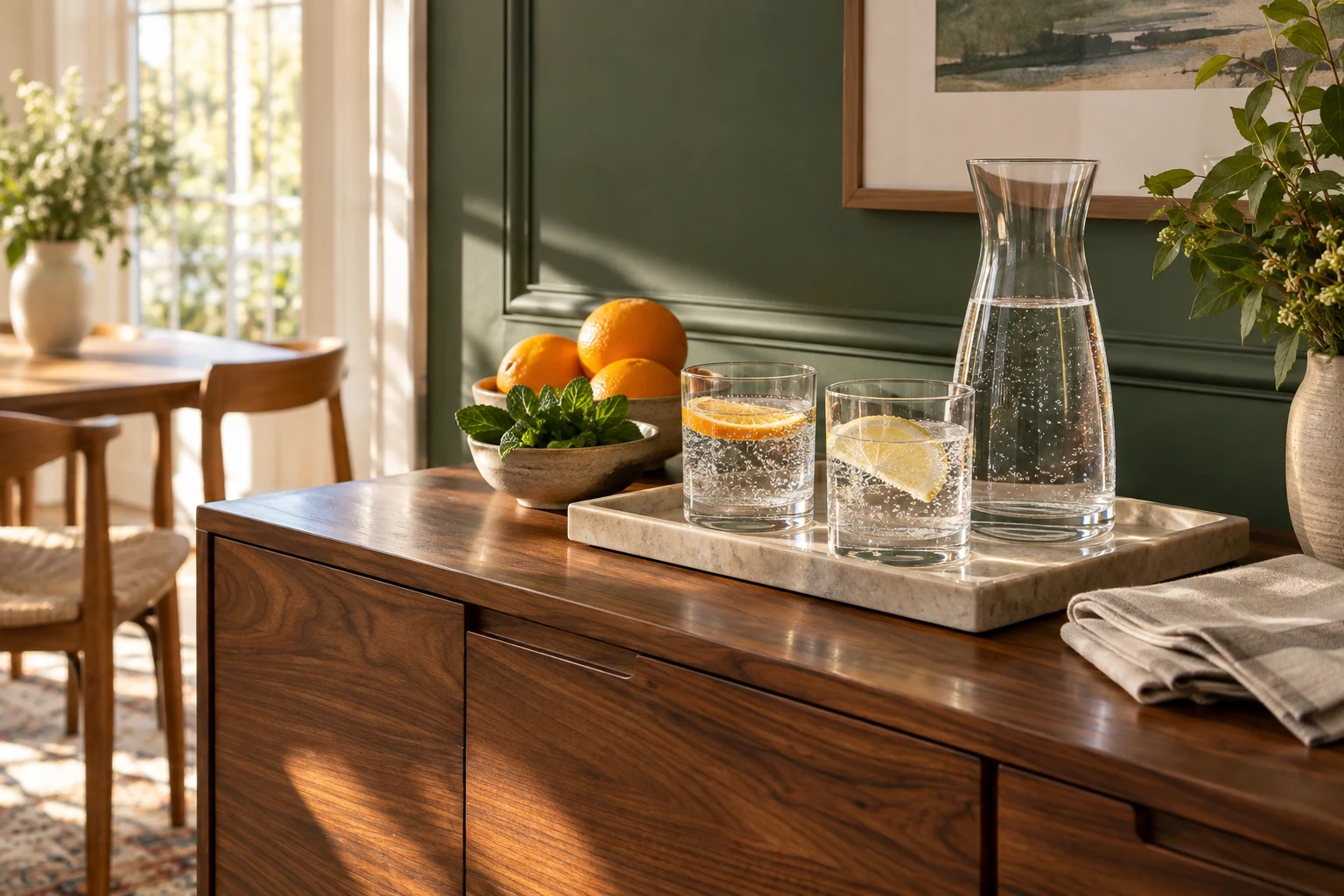
Group the bar by function in a compact tray or cabinet, and remove anything that will expire before another likely use. A sophisticated setup is legible: guests can tell what a drink contains, the host can repeat it, and no one has to buy an entire shelf of single-use tools.
Sources: National Restaurant Association; U.S. Food and Drug Administration
Sources & further reading
Factual guidance is grounded in the sources below. Styling suggestions and decision aids are our editorial interpretation.
- What's Hot 2026 Culinary ForecastNational Restaurant Association · Accessed October 1, 2026
- 2026 Food Nerd Kitchen Trend PredictionsAnova Culinary · Accessed October 1, 2026
- The Nutrition Facts LabelU.S. Food and Drug Administration · Accessed October 1, 2026
- Rethink Your DrinkCenters for Disease Control and Prevention · Accessed October 1, 2026
- Dealcoholized Wine and Malt Beverages — LabelingU.S. Food and Drug Administration · Accessed October 1, 2026
Written with care
Our aim is useful guidance, clear evidence, and considered choices. Found something that needs a second look? Tell us about a correction.