This article provides general information drawn from the sources below. It has not received an independent specialist review and cannot account for your individual health or safety needs.
The useful part
- Combine a base, protein or legume, produce, sauce, and finish; omit a part when the meal already feels complete.
- Choose the lunch by time, cleanup, and where it will be eaten—not by an idealized prep routine.
- Use cold-storage guidance and labels for perishable ingredients; the five-minute promise never overrides food safety.
The fastest useful lunch is usually an assembly, not a miniature cooking project. It starts with what is already safe, visible, and ready to eat, then adds enough contrast—crisp and soft, bright and savory—to feel intentional.
Circana's 2026 industry report says convenience remains central to U.S. eating patterns. It is a current proprietary industry signal, not individualized nutrition advice. The system below solves a workflow problem: making a satisfying lunch with the time and ingredients actually available.
Use the five-part assembly formula
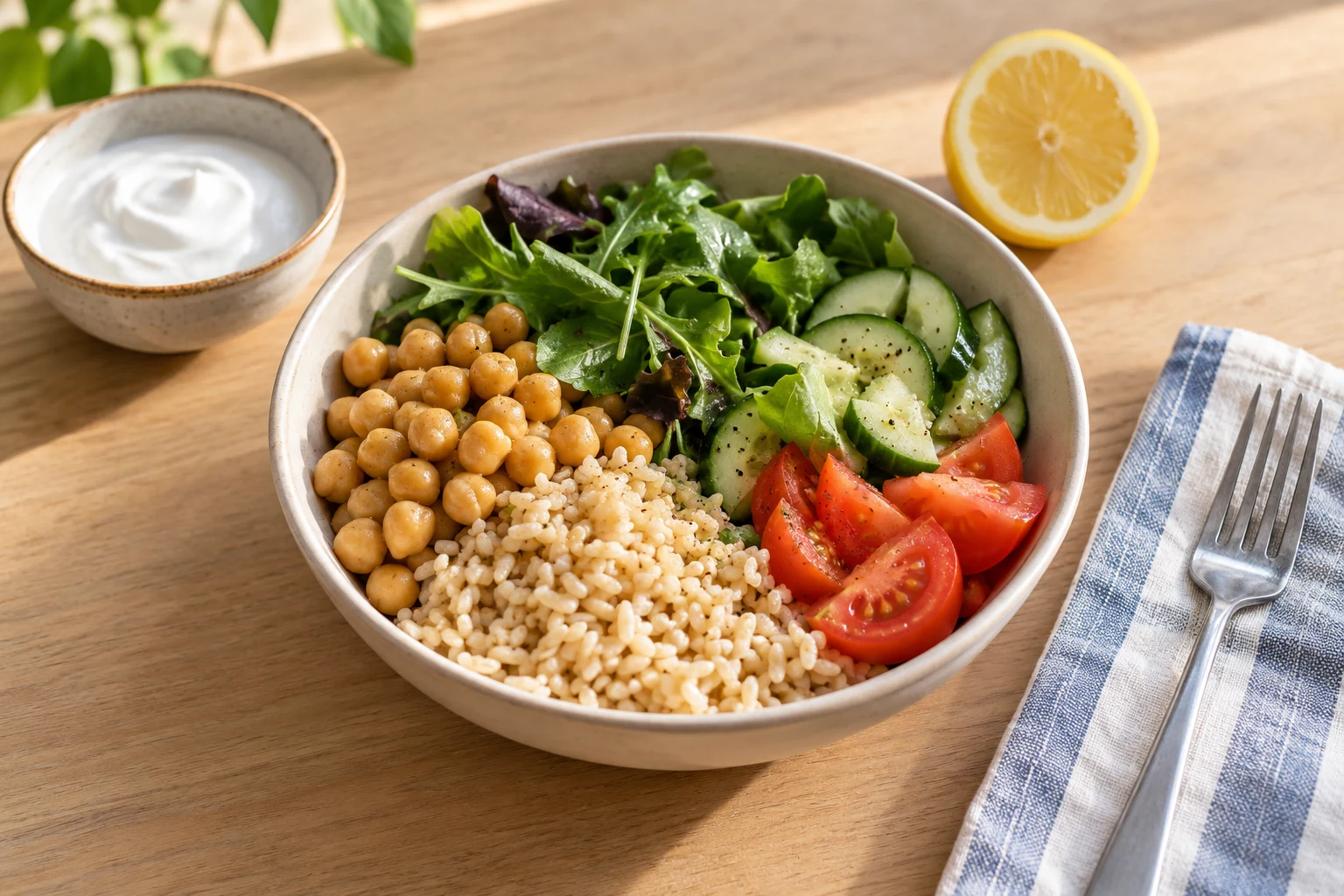
Start with a base such as bread, leftover grain, greens, tortilla, or a microwave-ready option. Add a protein or legume you already use, one or two forms of produce, a sauce or dressing, and a finish such as herbs, seeds, crunch, or acidity. The categories are prompts, not requirements.
Check leftovers and opened packages first. USDA advises refrigerating leftovers promptly and generally using refrigerated cooked leftovers within three to four days. If the handling history is unclear or food exceeded safe time or temperature guidance, choose another ingredient rather than trying to rescue it in a quick lunch.
Choose the route by friction
An under-five-minute lunch uses ready components and one bowl or plate. A one-pan lunch allows a little heating and produces one cooking surface. A portable lunch with perishable food needs a safe cold- or hot-holding plan through the time it is eaten; follow current USDA and FoodSafety.gov guidance.
Count the dishes and active steps before starting. A meal that needs a knife, board, pan, blender, and storage container is not a five-minute assembly even if each step sounds short. Prewashed or frozen produce and packaged components can reduce friction; compare serving size, ingredients, sodium, and added sugars on the current Nutrition Facts label when those factors matter to you.
| Path | Example structure | Active work | Storage question |
|---|---|---|---|
| Under five minutes | Bread or greens + ready protein or legume + produce + sauce | Open, assemble, return ingredients | Are opened and leftover items within guidance? |
| One pan | Leftover grain + frozen vegetables + egg or other ready component | Heat, combine, finish | Did every reheated leftover reach current USDA guidance? |
| Portable | Wrap or grain bowl + sturdy produce + separate sauce | Assemble and pack | Can it stay safely cold or hot until eaten? |
Sources: USDA Food Safety and Inspection Service; U.S. Food and Drug Administration; FoodSafety.gov
Stock components, not aspirational meals
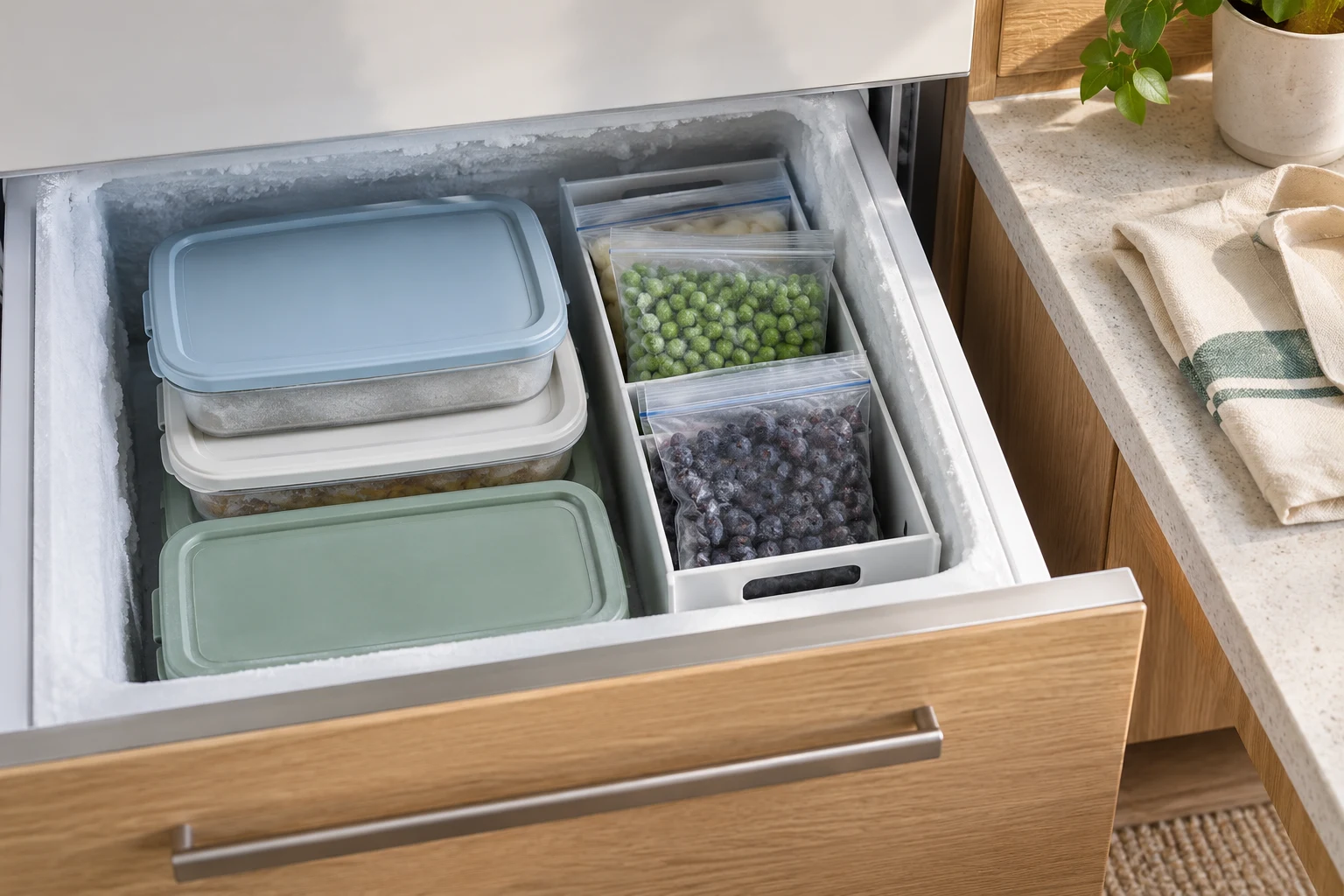
Keep two bases, two dependable protein or legume options, produce in forms you reliably finish, and two contrasting sauces or finishes. Frozen, canned, and refrigerated items can all play a role. Rotate based on what is open rather than maintaining a long inventory.
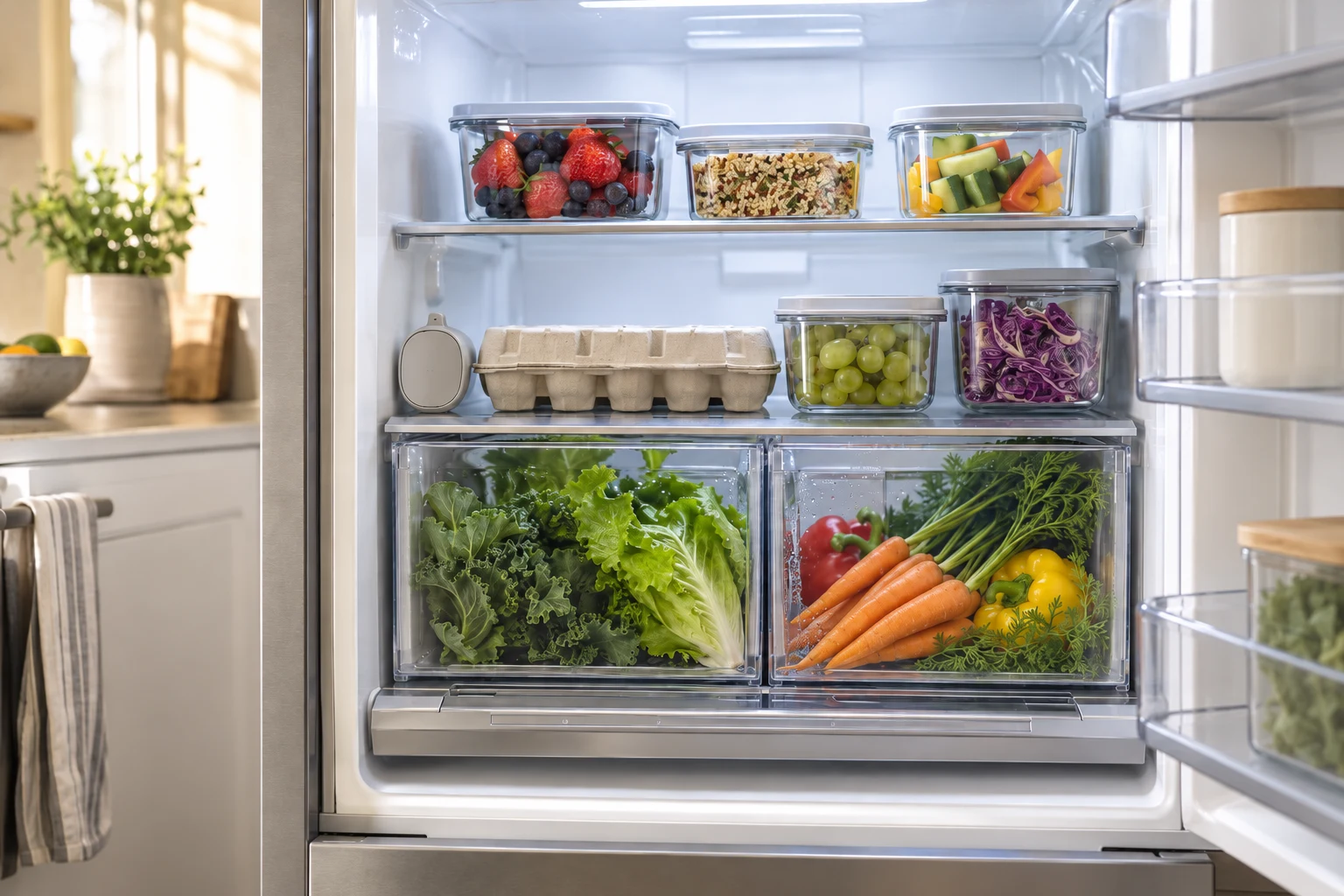
Place first-to-use ingredients together and label leftovers with contents and date. A clear container improves visibility but does not extend safe storage time. Use USDA's item-specific links and current package guidance when a product does not fit the general leftover rule.
Keep this in mind
- One shelf or bin is marked first to use.
- Leftovers show contents and date.
- At least one produce option needs no chopping.
- Sauces differ enough to change the meal.
- Portable equipment matches the holding time and food.
Build three combinations without recipe claims
Try a toast or wrap with beans, crunchy vegetables, and a bright sauce; a grain bowl with leftover roasted vegetables, a ready protein, and an herb finish; or greens with canned fish or chickpeas, fruit, and a savory dressing. Treat these as structures and follow ingredient labels and safe-cooking requirements.
Adjust texture before adding more volume. Crunch can come from fresh vegetables or seeds; acidity from citrus or vinegar-based dressing; creaminess from a spread. A small contrast often does more than another ingredient and keeps preparation and cleanup contained.
Sources: U.S. Food and Drug Administration
Keep speed inside the safety boundary
Cold perishable food needs to remain cold and reheated leftovers need to follow USDA temperature guidance. Use a food thermometer when guidance calls for one, and do not rely on appearance. For a packed lunch, follow the storage equipment's instructions and current official food-safety advice.
Keep a short list of combinations you enjoyed, with a note about what was already prepared. Next time, that list gives you a starting point without another round of meal planning.
Sources & further reading
Factual guidance is grounded in the sources below. Styling suggestions and decision aids are our editorial interpretation.
- Eating Patterns in America 2026Circana · Accessed October 1, 2026
- Leftovers and Food SafetyUSDA Food Safety and Inspection Service · Accessed October 1, 2026
- The Nutrition Facts LabelU.S. Food and Drug Administration · Accessed October 1, 2026
- Cold Food Storage ChartFoodSafety.gov · Accessed October 1, 2026
Written with care
Our aim is useful guidance, clear evidence, and considered choices. Found something that needs a second look? Tell us about a correction.