This article provides general information drawn from the sources below. It has not received an independent specialist review and cannot account for your individual health or safety needs.
The useful part
- A wind-down routine should reduce decisions and stimulation without claiming to induce or cure sleep.
- Choose one quiet activity, one small environment adjustment, and one closing cue that fit your access and household needs.
- Avoid breath holds, rapid breathing, hyperventilation, and any practice that causes dizziness, distress, pain, or shortness of breath.
A busy evening needs a routine small enough to survive it. Three calm minutes can mark the end of work or scrolling, prepare one thing for morning, and shift attention to a low-demand activity. The purpose is a gentler transition, not a performance that guarantees sleep.
NHLBI recommends a quiet hour before bed and reducing bright artificial light as general sleep habits. AASM’s social-trend survey shows interest in relaxation practices, but interest is not efficacy.
Choose a closing cue
Use an event that already occurs: the dishwasher starts, the laptop closes, the last pet outing ends, or an alarm sounds. Pair it with one sentence that closes the loop, such as writing tomorrow’s first task. A visible cue prevents the routine from depending on noticing that you are tired.
If your evening is governed by shift work, caregiving, children, symptoms, or shared space, choose a cue under your control. The clock time can vary while the sequence remains recognizable. Do not delay needed care or shorten sleep to complete the routine.
Sources: National Heart, Lung, and Blood Institute; National Heart, Lung, and Blood Institute; National Heart, Lung, and Blood Institute
Let the room support the routine
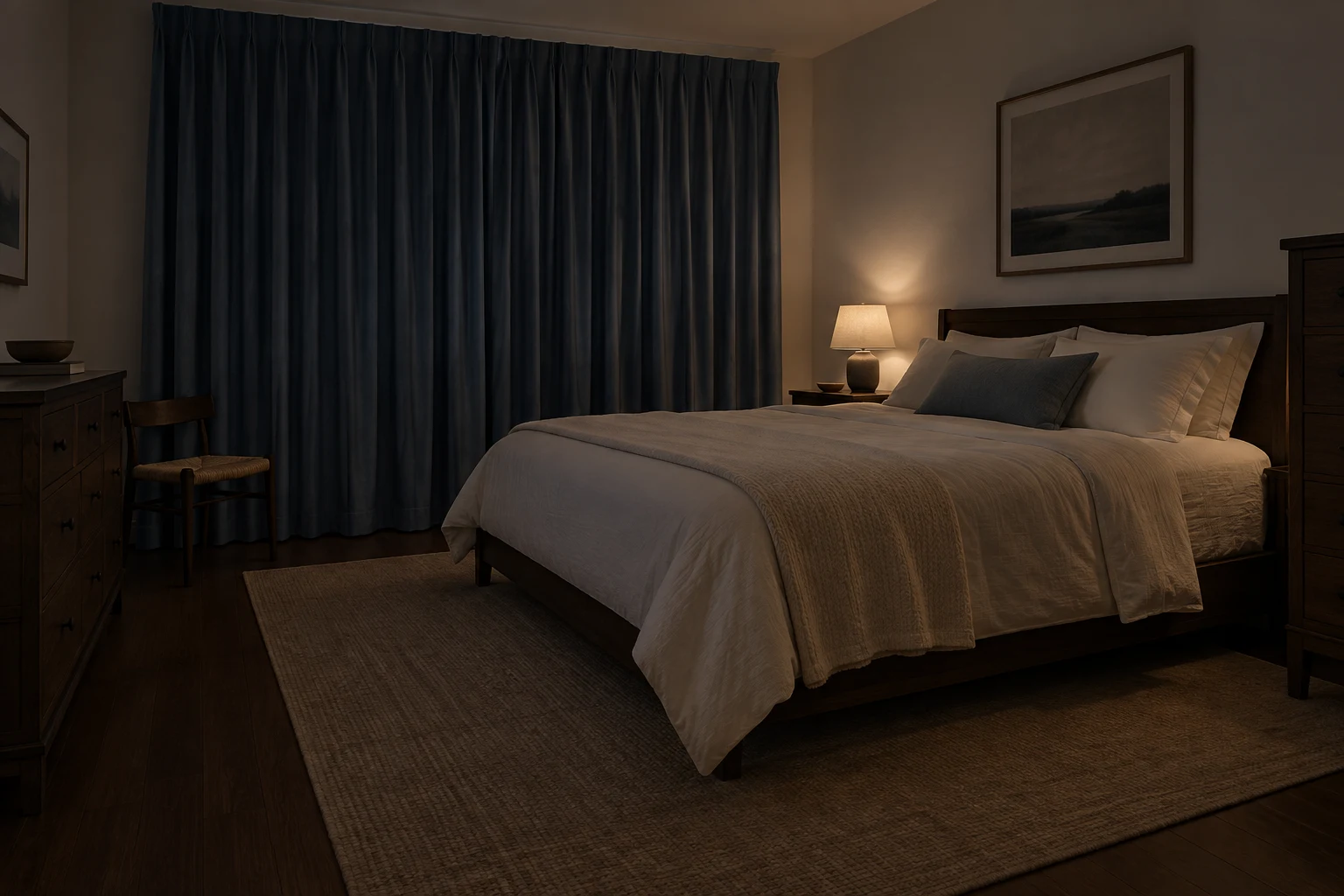
Reduce one avoidable stimulus rather than redesigning the bedroom. Lower an existing light while keeping paths safe, move active work off the bed, close a door if practical, or prepare a comfortable layer. NHLBI describes a cool, quiet, dark room as generally supportive, but comfort, disability, climate, housing, and household needs vary.
Products are optional. A lamp, journal, speaker, scent, weighted item, or specialty bedding is not required. Fragrance can bother people, weighted products are not suitable for everyone, and sound can mask important alerts. Start with what is already available and identify the actual friction before shopping.
Use a diary that does not grade sleep
For seven evenings, record whether you used the cue, which three-minute option you chose, and whether it made the transition feel easier, neutral, or harder. Add one note about what interrupted it. Avoid assigning a sleep-quality score to every night or treating one difficult morning as proof the routine failed.
At the end, keep only the step that reduced friction. Shorten or remove the rest. If the diary increases monitoring or worry, stop using it. The purpose is to learn which transition feels workable, not to optimize every minute.
Keep this in mind
- Record the closing cue.
- Name the chosen quiet activity.
- Note one environment adjustment, if any.
- Mark the transition easier, neutral, or harder.
- Capture the main interruption without blaming yourself.
Sources: American Academy of Sleep Medicine
Keep a clear clinical boundary
A wind-down routine is not a diagnosis or substitute for care. Persistent sleep difficulty, loud snoring or gasping, or daytime sleepiness warrants clinician discussion.
Keep the experiment modest: one cue, one comfortable low-demand activity, and one observation about whether the evening became easier to close.
Sources & further reading
Factual guidance is grounded in the sources below. Styling suggestions and decision aids are our editorial interpretation.
- Healthy Sleep HabitsNational Heart, Lung, and Blood Institute · Accessed October 1, 2026
- Scrolling for Sleep: The Social Media Trends Impacting Americans’ Sleep HabitsAmerican Academy of Sleep Medicine · Accessed October 1, 2026
- Insomnia — DiagnosisNational Heart, Lung, and Blood Institute · Accessed October 1, 2026
- Sleep Apnea — SymptomsNational Heart, Lung, and Blood Institute · Accessed October 1, 2026
Written with care
Our aim is useful guidance, clear evidence, and considered choices. Found something that needs a second look? Tell us about a correction.