This article provides general information drawn from the sources below. It has not received an independent specialist review and cannot account for your individual health or safety needs.
The useful part
- Buy only a product clearly labeled for edible use from a traceable food supplier.
- Tallow has cooking and flavor characteristics, but a retailer trend forecast does not establish a health advantage.
- Compare it with other fats by the recipe, flavor, handling, label, and household dietary needs.
Beef tallow is rendered beef fat used in frying and baking, among other applications. Its renewed visibility can make a familiar cooking fat sound like a universal upgrade. It is better understood as one ingredient with a particular flavor, texture, source, and storage requirement.
Whole Foods Market placed tallow in its 2026 retailer forecast. That supports a timely explainer, not the claim that tallow is healthier than another fat or appropriate for every diet. USDA defines edible tallow as fat rendered from edible beef portions under meat-inspection supervision. Use only a product whose label identifies it for food use.
Start with the edible designation
USDA Agricultural Marketing Service describes edible tallow as derived by rendering fatty tissue from edible portions of beef carcasses under USDA meat-inspection supervision, then refining it to remove solids and moisture. It notes frying oil and shortening in baked goods as principal uses.
Do not use a product intended for soap, cosmetics, animal feed, crafts, or technical applications in food. Read the current label for intended use, ingredients, storage directions, allergen or facility statements, and supplier identity. Terms such as grass-fed or traditional require their own support and do not establish a health outcome.
Sources: USDA Agricultural Marketing Service
Compare the cooking job, not the hype
Tallow can contribute savory flavor and a firm texture at room temperature. Those qualities may suit certain roasting, frying, pastry, or skillet uses and conflict with others. A neutral oil may better preserve delicate flavors; butter brings water and milk solids that behave differently; other solid fats have their own handling and dietary tradeoffs.
Do not use a generic internet smoke point as permission to overheat the fat. USDA explains that cooking oil begins to break down at its smoke point. Follow the product directions and recipe, provide ventilation, and never leave heated fat unattended.
| Decision | Reason | Verify |
|---|---|---|
| Use it | The recipe benefits from its flavor and solid-fat behavior | Edible label, recipe method, storage directions |
| Skip it | The flavor conflicts, dietary needs rule it out, or sourcing is unclear | Household needs and ingredient information |
| Compare it | Several fats could do the job | Flavor, recipe behavior, label, storage, supplier transparency |
Sources: USDA Agricultural Marketing Service; Whole Foods Market; USDA Food Safety and Inspection Service
Handle hot fat deliberately
Use a stable pan with enough headroom, keep water away from hot fat, and turn handles away from the edge. Have a fitted lid available where the recipe and equipment make that appropriate. Keep children and pets outside the cooking zone and stay with the pan.
For a grease fire, follow current fire-safety guidance and do not use water. If you are uncertain about deep-frying setup or emergency response, choose a lower-risk cooking method. Cool used fat safely and follow local disposal guidance rather than pouring it down a drain.
Sources: National Fire Protection Association; USDA Food Safety and Inspection Service
Follow the package for storage
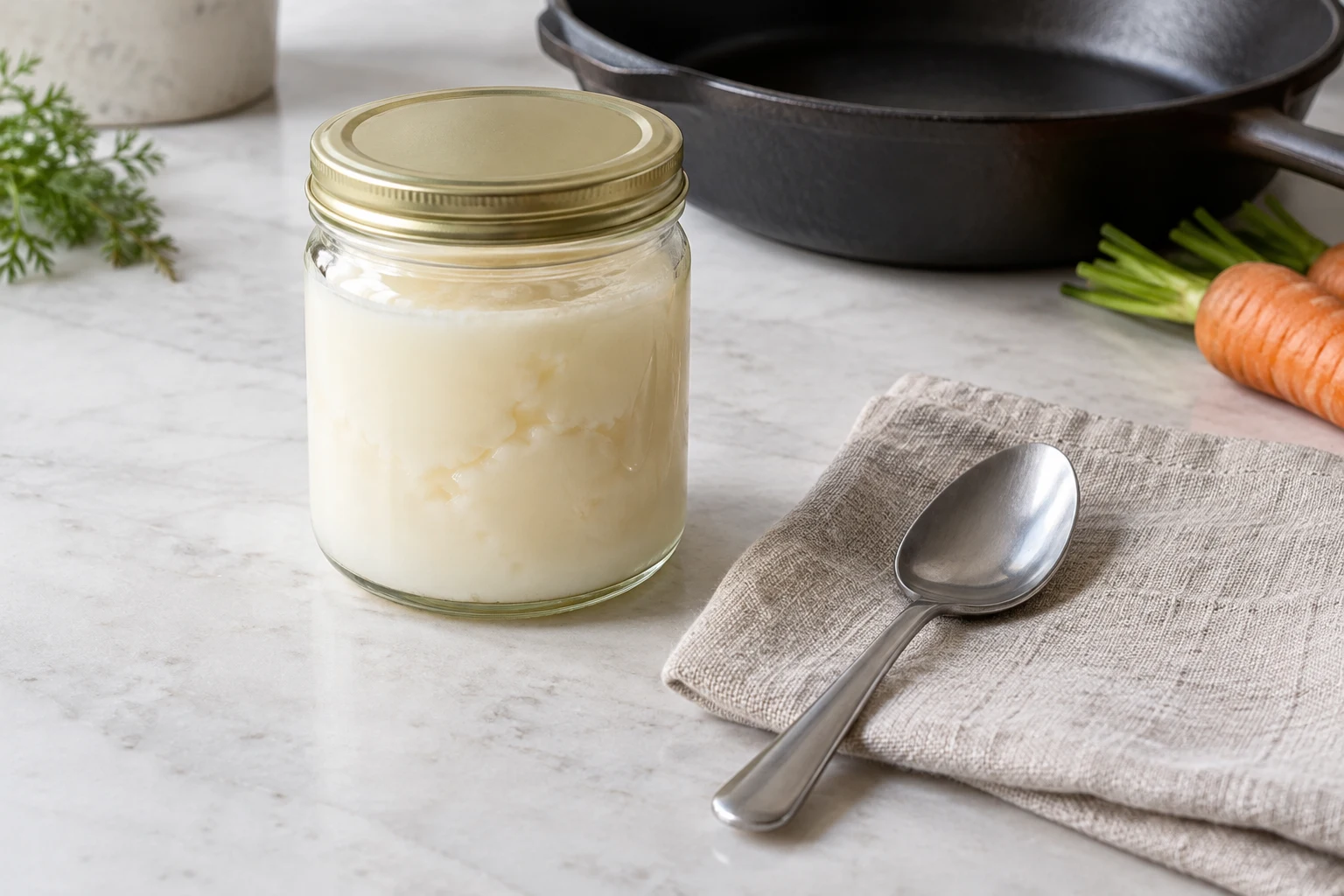
Commercial tallow products vary in processing, packaging, and storage instructions. Keep the original label, use clean utensils, close the container, and follow the manufacturer's refrigeration and use-by directions. If rendered at home, use a research-based food-safety method rather than assuming a clear appearance makes it shelf stable.
If handling or storage is uncertain, replace the fat rather than trying to filter or reheat it into safety. For used frying oil, USDA gives specific cooling, storage, reuse, and disposal guidance; follow that guidance and the product instructions.
Sources: USDA Food Safety and Inspection Service; USDA Food Safety and Inspection Service
Keep cooking utility separate from health claims
A trend report, chef preference, or ingredient origin does not demonstrate disease prevention, weight change, hormone effects, or superiority to other fats. Nutrition questions depend on the full eating pattern and individual needs.
Choose edible tallow when its flavor and texture suit a recipe and its source, label, handling, and storage are clear. A cooking preference does not need to become a health claim.
Sources: Whole Foods Market; USDA Agricultural Marketing Service
Sources & further reading
Factual guidance is grounded in the sources below. Styling suggestions and decision aids are our editorial interpretation.
- The Next Big Things: Our Top Food Trend Predictions for 2026Whole Foods Market · Accessed October 1, 2026
- Edible TallowUSDA Agricultural Marketing Service · Accessed October 1, 2026
- Food SafetyUSDA Food Safety and Inspection Service · Accessed October 1, 2026
- Cooking SafetyNational Fire Protection Association · Accessed October 1, 2026
- Deep Fat Frying and Food SafetyUSDA Food Safety and Inspection Service · Accessed October 1, 2026
Written with care
Our aim is useful guidance, clear evidence, and considered choices. Found something that needs a second look? Tell us about a correction.