This article provides general information drawn from the sources below. It has not received an independent specialist review and cannot account for your individual health or safety needs.
The useful part
- Start with the daily abilities you want to support, then choose movements with a qualified professional when needed.
- A stable chair, clear floor, manageable resistance, and repeatable schedule matter more than a large equipment collection.
- Pain, dizziness, chest symptoms, or a meaningful change in function call for stopping and appropriate medical guidance.
Strength training after 65 can begin with a practical question: which everyday task would you like to keep easier? Rising from a chair, carrying groceries, reaching a shelf, and climbing steps all involve strength, balance, mobility, or coordination. A useful plan connects training to those functions without pretending one routine suits every body or medical history.
CDC guidance says older adults need a weekly mix of aerobic, muscle-strengthening, and balance activity, while also advising people with chronic conditions to understand how those conditions affect safe activity.
Choose a function, not a fitness identity
List two daily tasks that feel important and one that has become less comfortable or confident. Describe the demand without diagnosing the cause: standing from a low seat, lifting an object from counter height, carrying bags a short distance, or stepping over a threshold. This gives a professional something concrete to assess and keeps your goal connected to daily life.
Do not assume difficulty means you simply need a harder workout. If a symptom, fall, medication effect, or health condition makes activity uncertain, discuss safe options with a clinician before changing the plan.
Keep this in mind
- Name two daily tasks you want to support.
- Record recent falls, pain, dizziness, chest symptoms, or major changes in ability for a clinician.
- List current activity, mobility aids, and any instructions already given by your care team.
- Choose a location with support, light, and room to move safely.
Sources: Centers for Disease Control and Prevention; American College of Sports Medicine
Make the setting easy to repeat
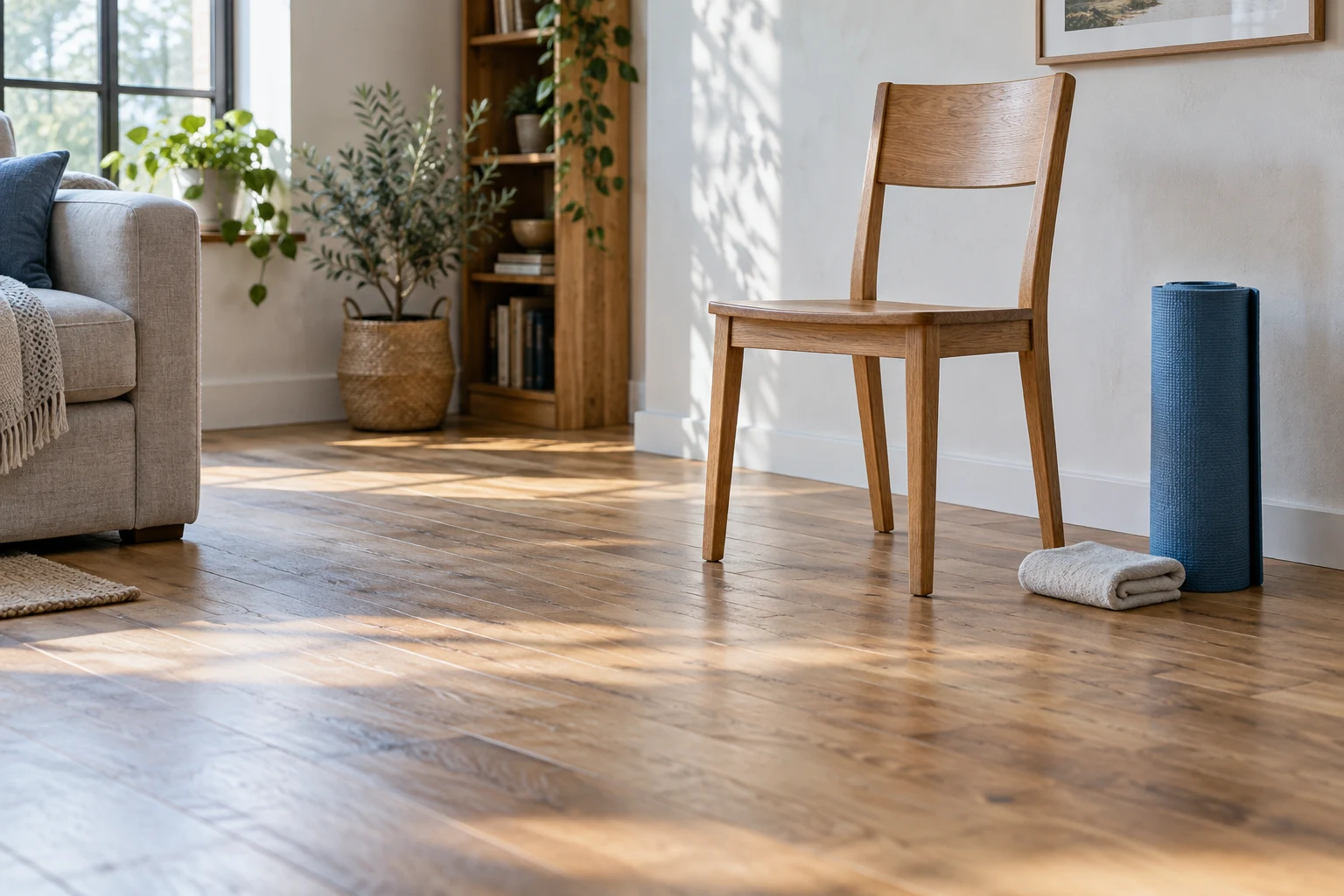
Clear the floor, secure loose rugs, provide even lighting, and place a stable chair where it cannot slide. Keep pets, cords, and clutter out of the movement path. If you use a mobility aid, do not set it aside merely to make an exercise look conventional; ask a qualified professional how it should be incorporated.
Comfortable clothing and secure footwear may be enough to begin. Equipment should solve an identified need. A resistance band is compact but requires grip, anchoring, and inspection. Dumbbells provide measurable resistance but must be carried and stored. Machines can offer support yet still require setup. Body-weight and household-task practice may be appropriate for some people, but movement selection belongs to the reviewed plan.
Use a daily-task movement map
A movement map organizes a conversation without prescribing sets or loads. A sit-to-stand task involves lower-body force and control. Carrying involves grip, trunk control, and walking. Reaching involves shoulder capacity and balance. Stair use combines leg strength, balance, and confidence. Each can be trained in multiple ways, including supported or seated options.
Ask a qualified professional to help choose a version you can perform with steady control and an appropriate range. Discuss what stable support is suitable, what signs mean a movement should change, and how to distinguish normal effort from a concerning symptom. For demonstrations, use a qualified instructor who explains setup and adaptations clearly.
| Daily task | Capacity involved | Planning question | Possible support to discuss |
|---|---|---|---|
| Rise from a chair | Leg strength and control | Which seat height and hand support are appropriate? | Firm chair, arms, nearby rail |
| Carry groceries | Grip, trunk control, walking | What load and distance are suitable now? | Smaller loads, balanced bags, cart |
| Reach a shelf | Shoulder motion and balance | What range avoids compensation or pain? | Lower storage, supported stance |
| Use steps | Leg strength and balance | Is supervised practice indicated? | Rail, alternate route, professional assessment |
Progress one variable at a time
Consistency comes before complexity. Keep a brief record of the movement, resistance or setup, perceived effort, and any symptoms during or after the session. A qualified professional can use that record to decide whether to adjust resistance, repetitions, range, tempo, support, or frequency. Changing several variables together makes it difficult to tell what caused improvement or trouble.
Avoid using soreness as the score. A session can be meaningful without leaving you sore, and absence of soreness does not prove that the plan should jump ahead. CDC encourages older adults to be as active as abilities and conditions allow; that flexibility is a reason to individualize, not a reason to ignore limitations.
Review the week by function and confidence
At the end of the week, ask whether the plan was understandable, whether the setting felt secure, and whether it fit your schedule. Note any task that felt easier, less confident, painful, or unusually tiring. These observations are more actionable than chasing a generic score or comparing your starting point with someone else’s.
Pause if symptoms are concerning or your ability changes suddenly, and seek appropriate medical guidance. If you are working with a qualified professional, make progression changes with them.
Sources: Centers for Disease Control and Prevention; American College of Sports Medicine
Sources & further reading
Factual guidance is grounded in the sources below. Styling suggestions and decision aids are our editorial interpretation.
- Older Adult Activity: An OverviewCenters for Disease Control and Prevention · Accessed October 1, 2026
- The Future of Fitness: ACSM Announces Top Trends for 2026American College of Sports Medicine · Accessed October 1, 2026
Written with care
Our aim is useful guidance, clear evidence, and considered choices. Found something that needs a second look? Tell us about a correction.